
Ok, here’s how this works:
First, the veligers (that’s the planktonic larvae of a mollusk, in this case, an abalone) putter around in the water for a week, eating nothing and looking for a good place to land. Then they settle down and grow pinhead-sized shells and eat cultured diatoms. (These stages are described and distant buildings are waved at but, as usual, the microscopic bits of the lifecycle are left out of the tour.)
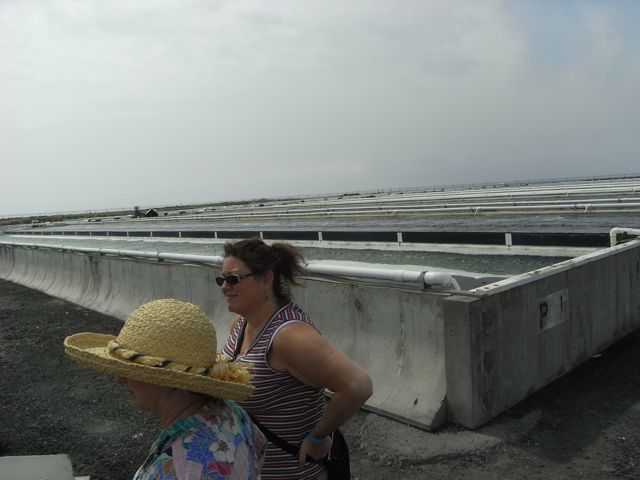
Meanwhile, a huge amount of algae is growing in big open-air troughs. The vast majority of space on the farm is devoted to these algae troughs, in much the same way that most of a 1950’s pig farm was devoted to beanfields.
Once the abalone are of a manageable size (yet still pretty tiny) they’re moved into big cages*. Each cage contains a big plastic manifold with lots of vertical growing space.
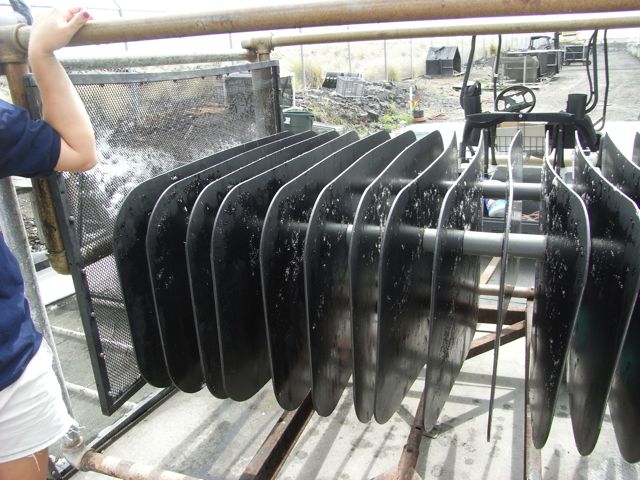
Periodically, these manifolds are lifted out of the cages and dropped into a bath of carbon dioxide-enriched seawater.
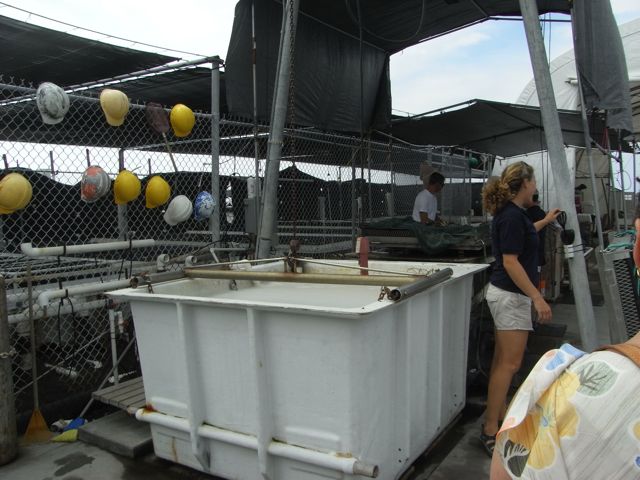
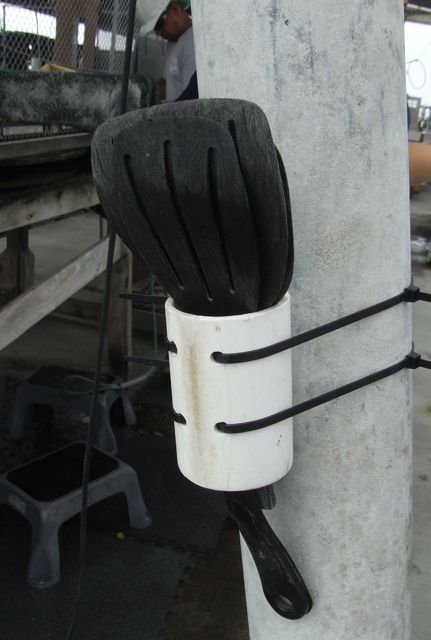
The CO2 dizzies the abalones and loosens their grip, but does not otherwise harm them. In their dizzy state, they can be removed from the manifold with a spatula**.
They’re all scooped into a big pile, where they immediately slurp onto each other’s backs. (But, hopefully, not all that hard, since they’re still dizzy from the CO2.)
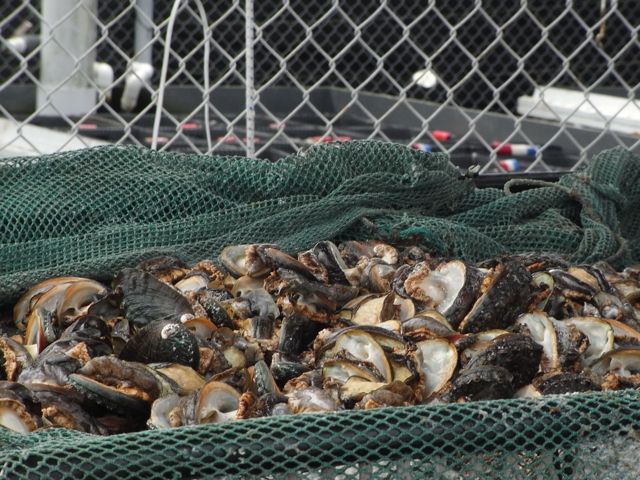
Then a group of dedicated and strong-handed individuals painstakingly separates them and sends them, one at a time, down a conveyor belt.
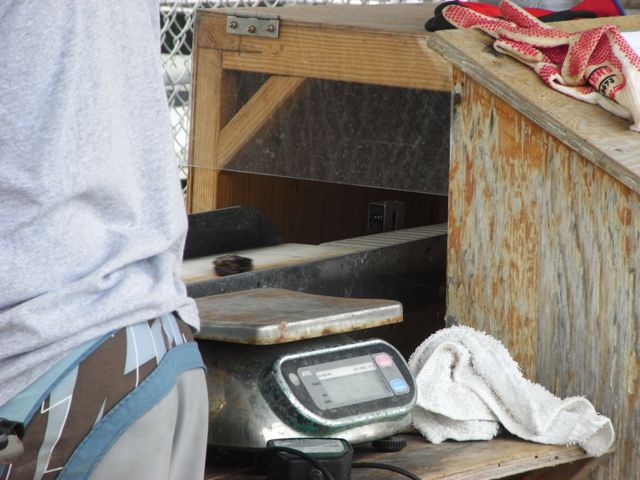
The conveyor belt rolls them over a big shiny weighing-machine
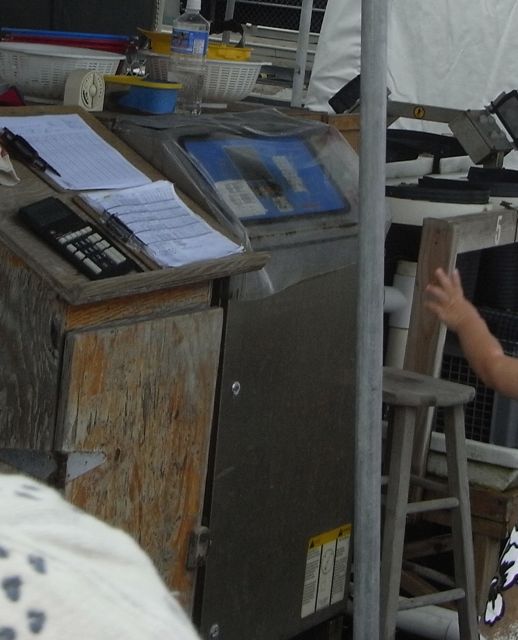
The weighing machine triggers various guide-arms to swing out, thus diverting the differently-sized abalone into appropriately-labeled bins.
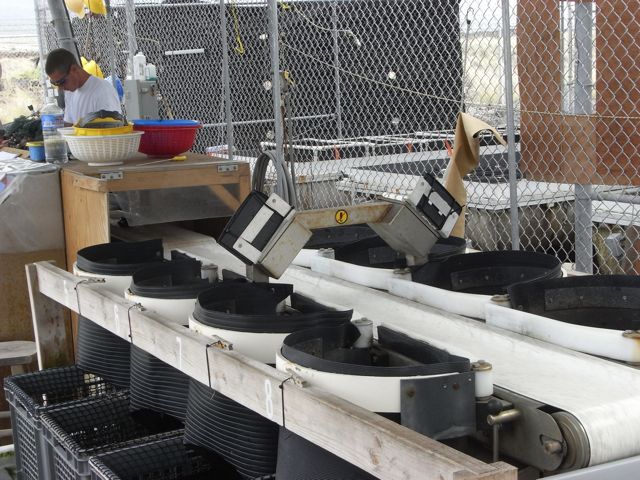
Tiny ones are sent back to the cages to eat more algae in the company of similarly-sized neighbors. (Apparently age doesn’t correspond very closely to size, so they need to be sorted and resorted to avoid the giants from out-competing the smaller ones.) Larger ones are packed off to market — for the most part, airlifted alive and damp to fancy restaurants in Japan. A very lucky few are reserved to spawn and produce the next generation.
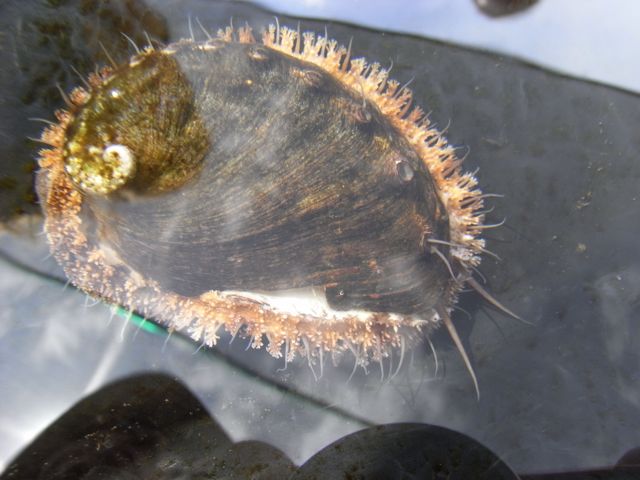
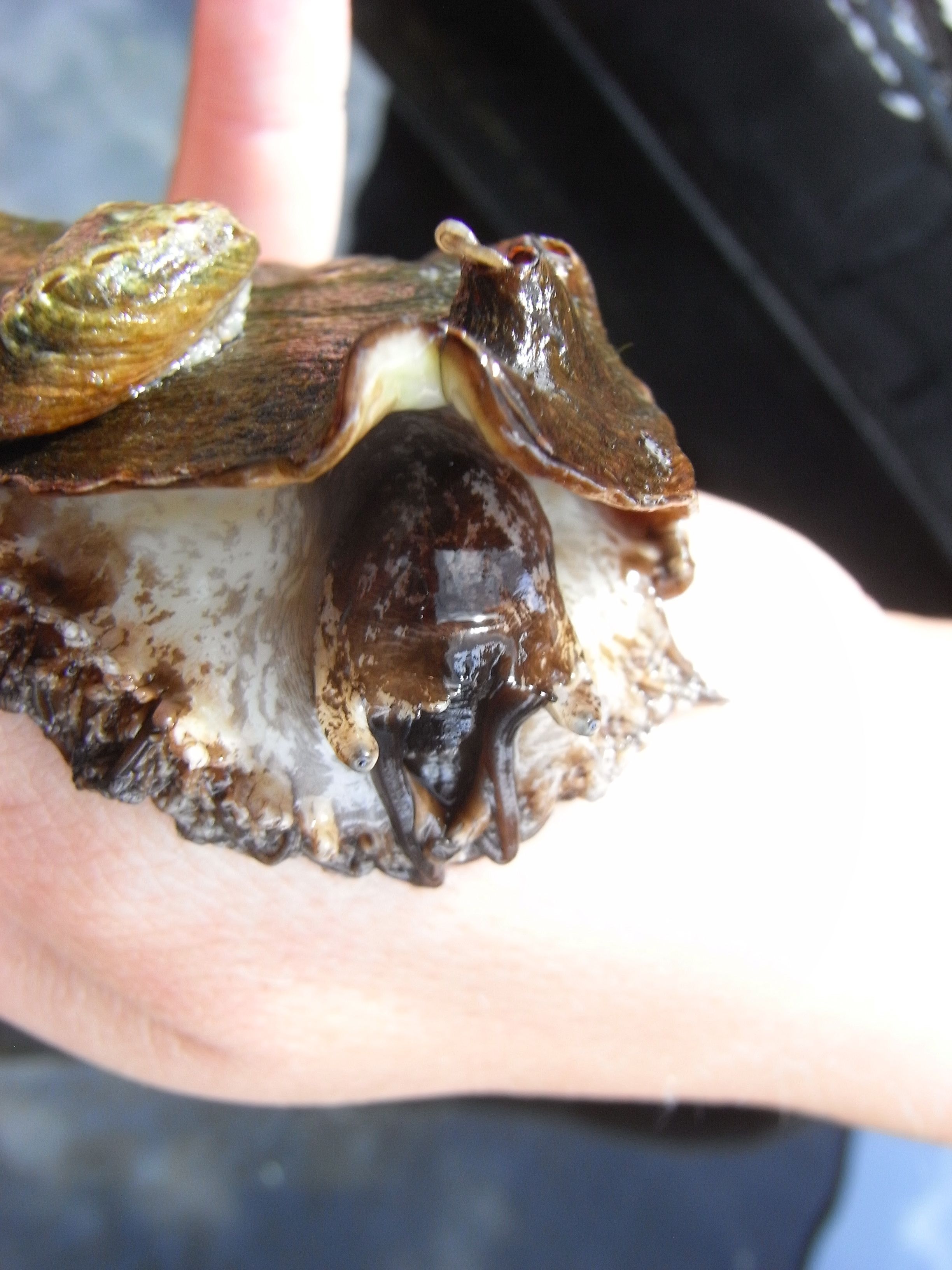
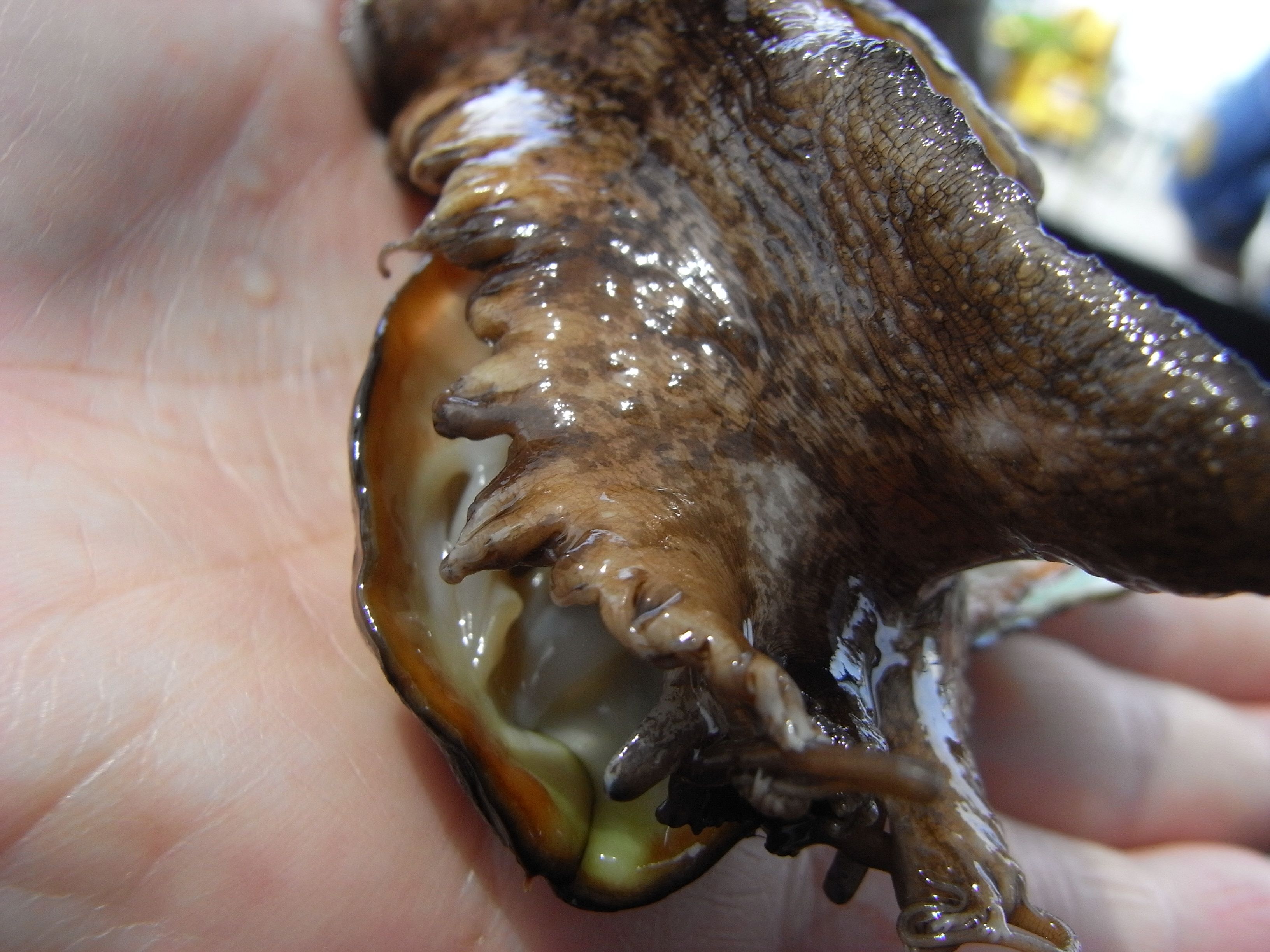
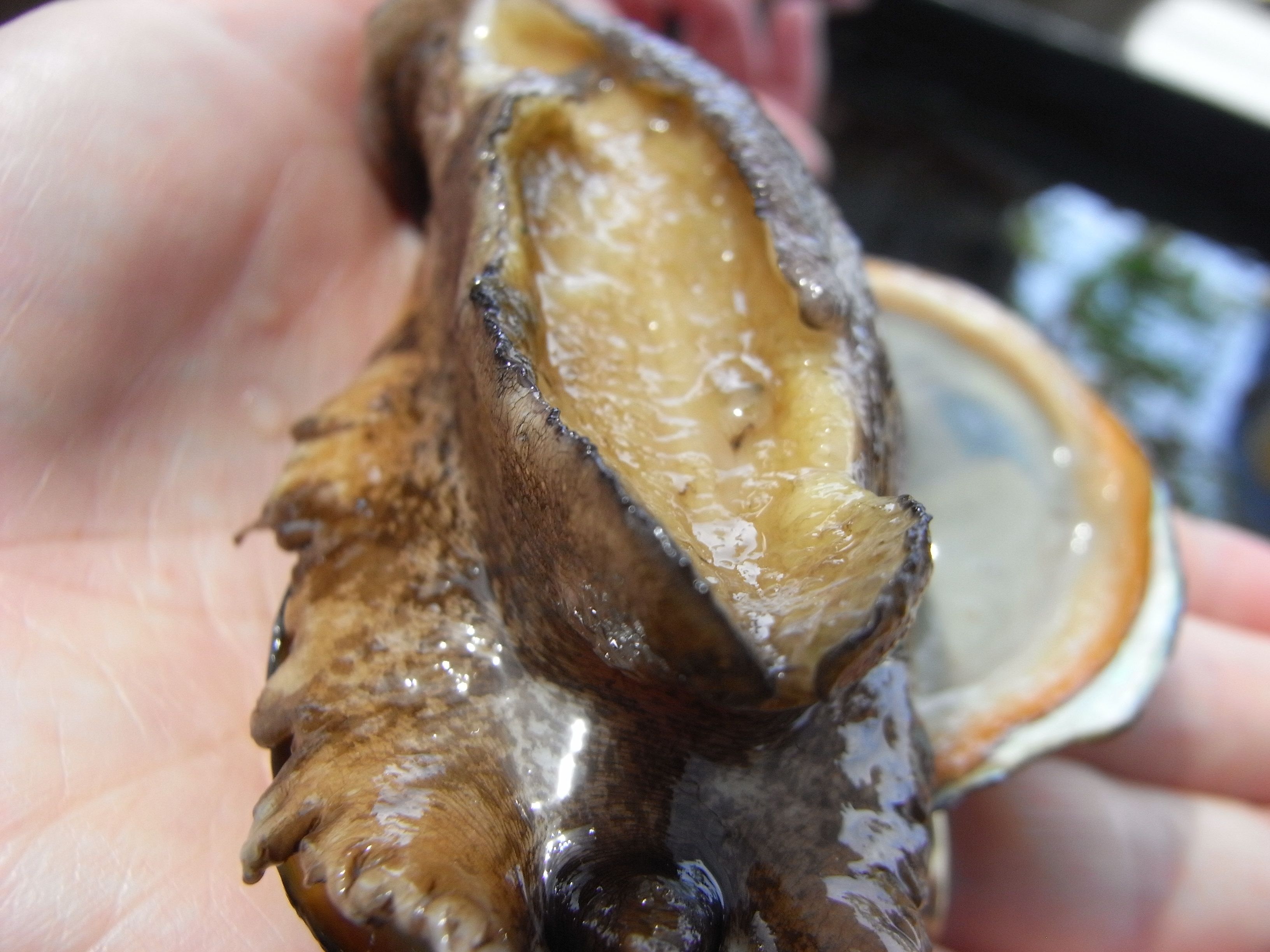
Here are some grotesque close-ups of an alarmed, overturned 3-inch-long abalone:
* Not tanks, cages. Apparently several years ago the farm kept their stock in open-air tanks, and a sudden nighttime drop in barometric pressure prompted all the abalone to spawn at once, badly fouling their water. The farm manager arrived the next morning to find that all the abalone had crawled out of their stinky tanks and were literally on the road, heading for the nearby ocean. So now they use cages, and maintain better water quality.
** I guess getting a wide-awake abalone unstuck is unrealistically difficult. How difficult? Well, my dad just told me a story about how my uncle Zeke used to fish for abalone. “Sometimes he would drive to Half Moon Bay with his wet suit and a tire iron…”