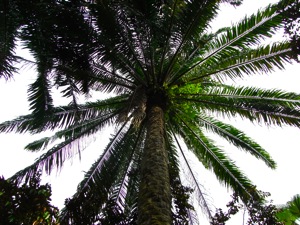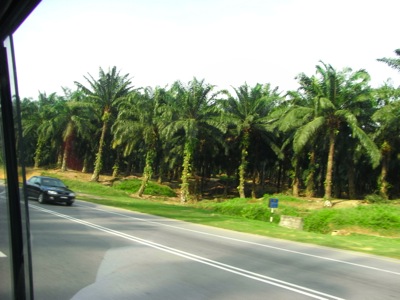
So far, most of what I’ve seen of the countryside of peninsular Malaysia consists of palm-oil plantations. Our tour-guide Saan’s father used to work as an engineer at an oil factory, so Saan is full of palm-related factoids.
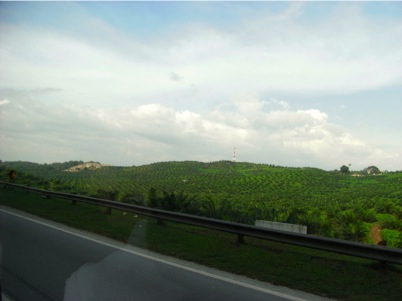
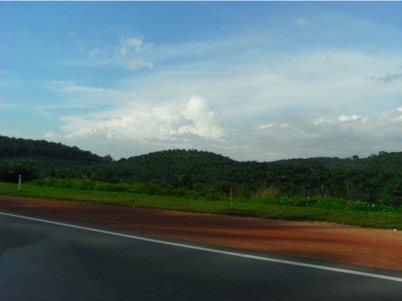
The trees are replanted every 20 years or so, and start producing fruit two or three years after planting. Old trees are shredded into mulch to feed the newly-planted trees.
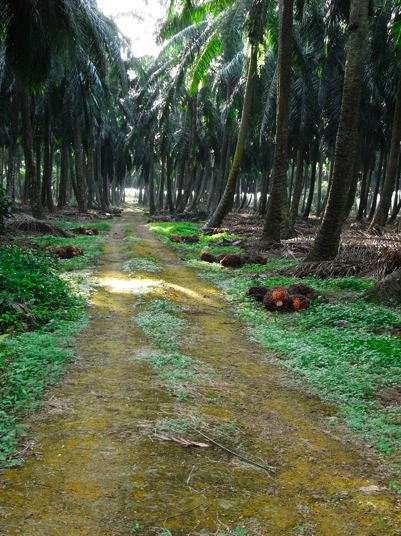
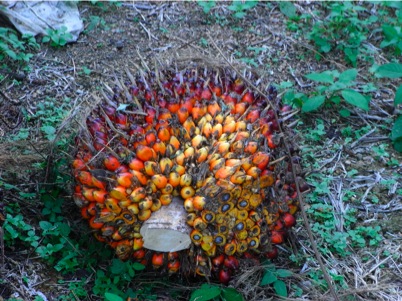
In many ways this strikes me as an ideal permaculture system — there’s no need to till the soil, harvesting happens at a low level throughout the year (the palms fruit continuously, so workers walk up and down the rows every few weeks cutting down the largest fruits.) Also there’s a fair amount of undergrowth left under the canopy so there’s some biodiversity — lots of ferns and other greenery provide shelter for birds and reptiles. Some plantations let turkeys run in the orchards to forage in the undergrowth.
Right now millions of acres of primary rainforest are being cut down to make way for palm plantations, and that’s clearly a net loss. But compared with corn or cane fields, I have to think that palm orchards are a fairly mild offense on the agribusiness spectrum. They also seem like a great candidate for charcoal sequestration.
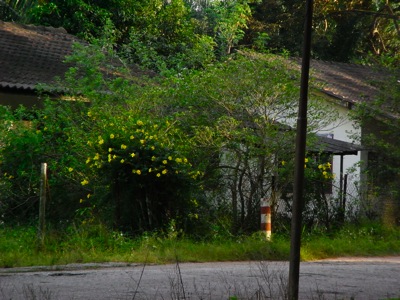
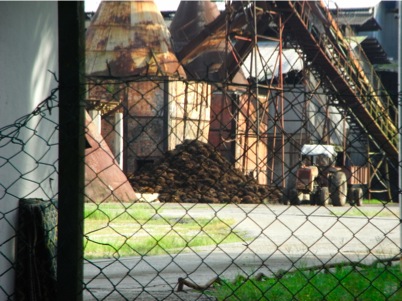
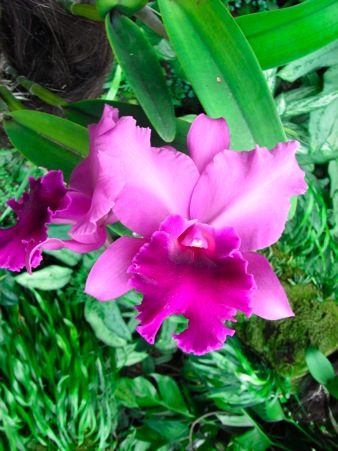
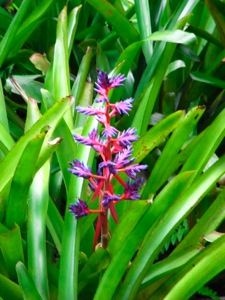
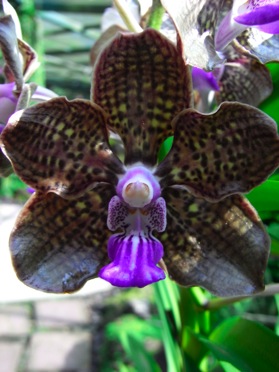
We pulled onto a side road to look at some worker housing and a processing plant. The housing is largely abandoned, as the plantation workers have prospered and moved out of plantation housing and into a nearby town, and the rows of houses are bordered with gracefully ruined flower gardens.