Flxible

I just transferred photos off my phone in order to upload jellyfish portraits (coming soon!) and discovered a couple of shots I took at a car show in San Diego a few months ago.

There are more, better photos and some explanation here.


For the record:  I’ve never been much drawn to the RV lifestyle, but if I found one of these under the Christmas Tree I would not turn up my nose.

Posted in Uncategorized | Leave a comment

E-mail Spammers: Worse Than Hitler?

The two pieces of spam that made it through gmail’s filter this week were an invitation to participate in survey of dairy farmers (“We don’t have a list of farmers but it doesn’t matter, we’ll just send it to everybody”) and this: an invitation to connect with Mike Godwin on a dating site.

Posted in Uncategorized | Leave a comment

shiny

Young Tanichthys thacbaensis

Group of two-week-old T. thacbaensis f1

Why would these tiny, bite-sized, fish be more brightly colored than their parents?  I’ve now raised four species of minnow whose babies have a bright, eye-catching stripe that the parent lacks:  three kinds of Tanichthys, and Danio choprae.

It seems idiotic for something so tiny to be so conspicuous… they may as well swim around on little plates carrying little bottles of barbecue sauce.  I don’t think it’s a cue for schooling, because the Tanichthys fry don’t school until they grow up, lose the bright line, and assume adult coloration.

My best guess is that it has to do with parental recognition.  Almost every kind of minnow will cheerfully devour its offspring; Tanichthys is unique in that parents and fry can coexist without any intergenerational cannibalism.  That doesn’t account for Danio choprae, though — they eat their eggs and fry just like any other danio, so maybe something else is going on there.

This post serves as a note to self:  I need to get some albino T. albonubes and see if their fry lack the blue stripe, and if so, if that affects parental predation.

Posted in Uncategorized | Leave a comment

C. serratirostris

Posted in critters | Leave a comment

“All”

I was just forwarded an invitation to a party at the Internet Archive — they’re celebrating various accomplishments including “All of Balinese Literature Online“.

Posted in Uncategorized | Leave a comment

Tanichthys thacbaensis


I got these guys from Frank Greco in July.  After several shifts into ever-smaller accommodations, they’ve finally produced a handful of fry.

I’m not sure if I’m the first to have this species spawn in captivity, but they’re a new and largely undocumented import.  So, for the record, here’s a photo of my high-tech breeding setup:

That’s a 20-liter tank with no filter, a bunch of moss, some snails, and six hiding thacbaensis.

24° C
250ppm tds
pH ~6.0
kH very low
food: ‘Tetra Tropical Crisps’ plus the occasional frozen bloodworm and/or frozen baby brine shrimp

The low pH might matter, since I didn’t get fry in any of their previous tanks which had a pH of 7+

The other two species in this genus have very bright reflective stripes as juveniles; I’m curious to see if thacbaensis follows suit, and what color the stripe is.

Posted in critters | Leave a comment

Chris Matthews is yelling at me a lot

Me at 'The Wicked Moose' in Rochester, MN


I’m attending a debate-watching event in Rochester, MN, thanks to a ride and invitation from a campaign worker.  It’s in a gloriously weird event space with multiple disco balls and crazy scaffolding and video screens all over the place.  It’s also freezing cold in here and Chris Matthews is giving Michael Steele the third degree and it’s pretty much just like 5th grade gym class all over again.


Posted in Uncategorized | Leave a comment

Goldfish embryos, grown up

Photos of six-month old goldfish

Four months later, the embryos I photographed in May look like goldfish! Those shown grew up outdoors and are nickel-sized. The ones I raised indoors are paler and much bigger, one as long as my thumb.

Posted in critters | Leave a comment

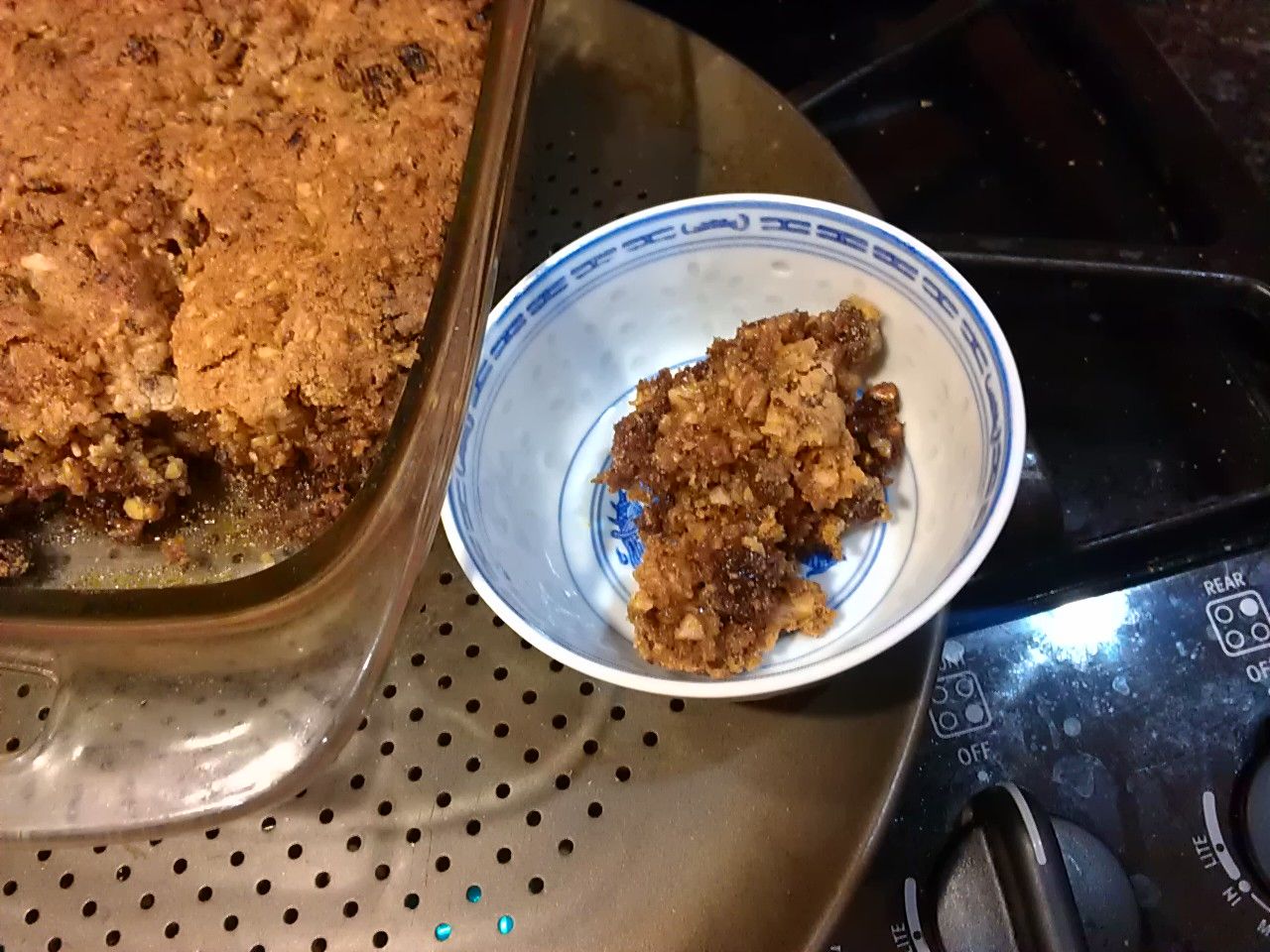
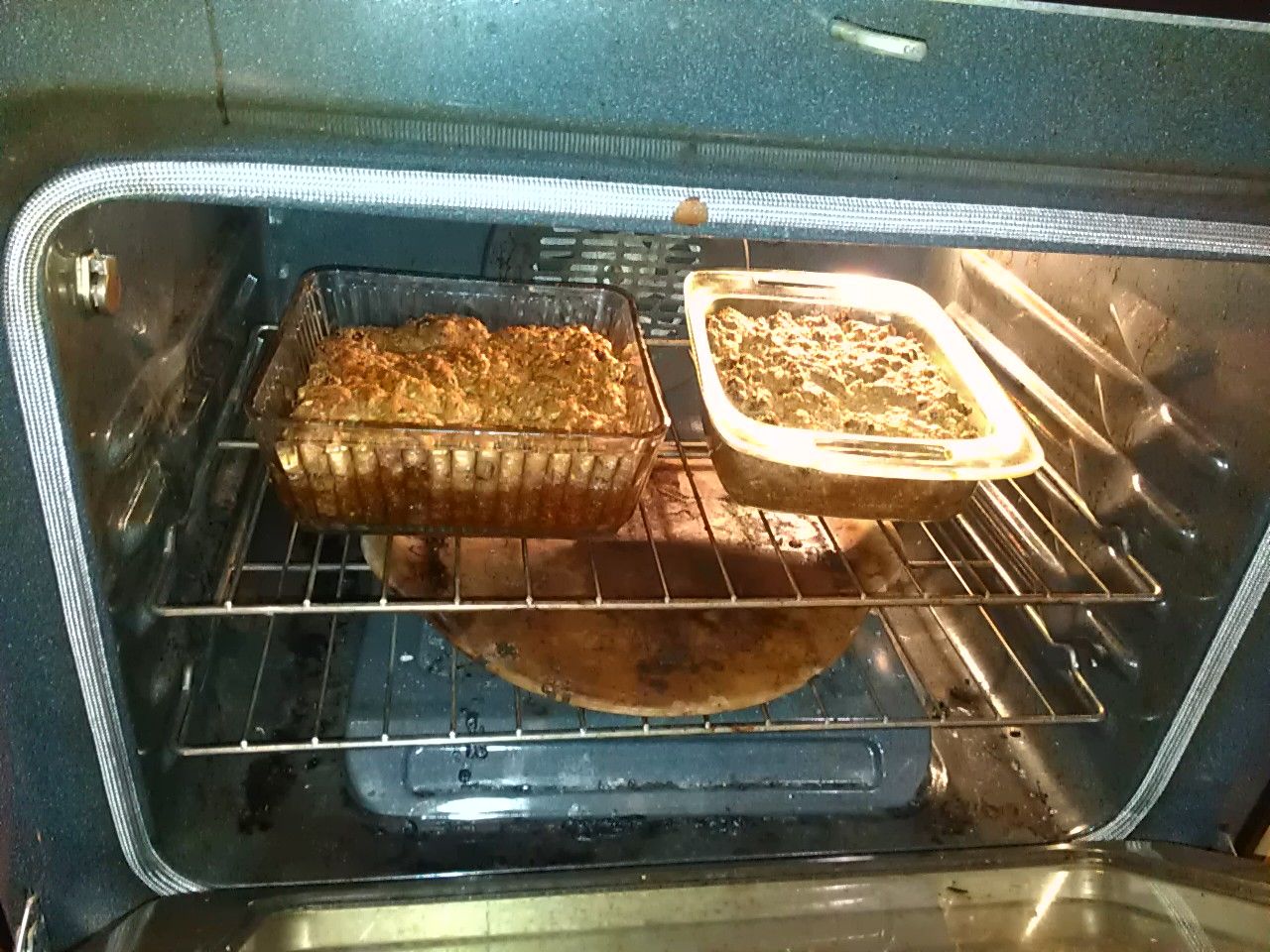
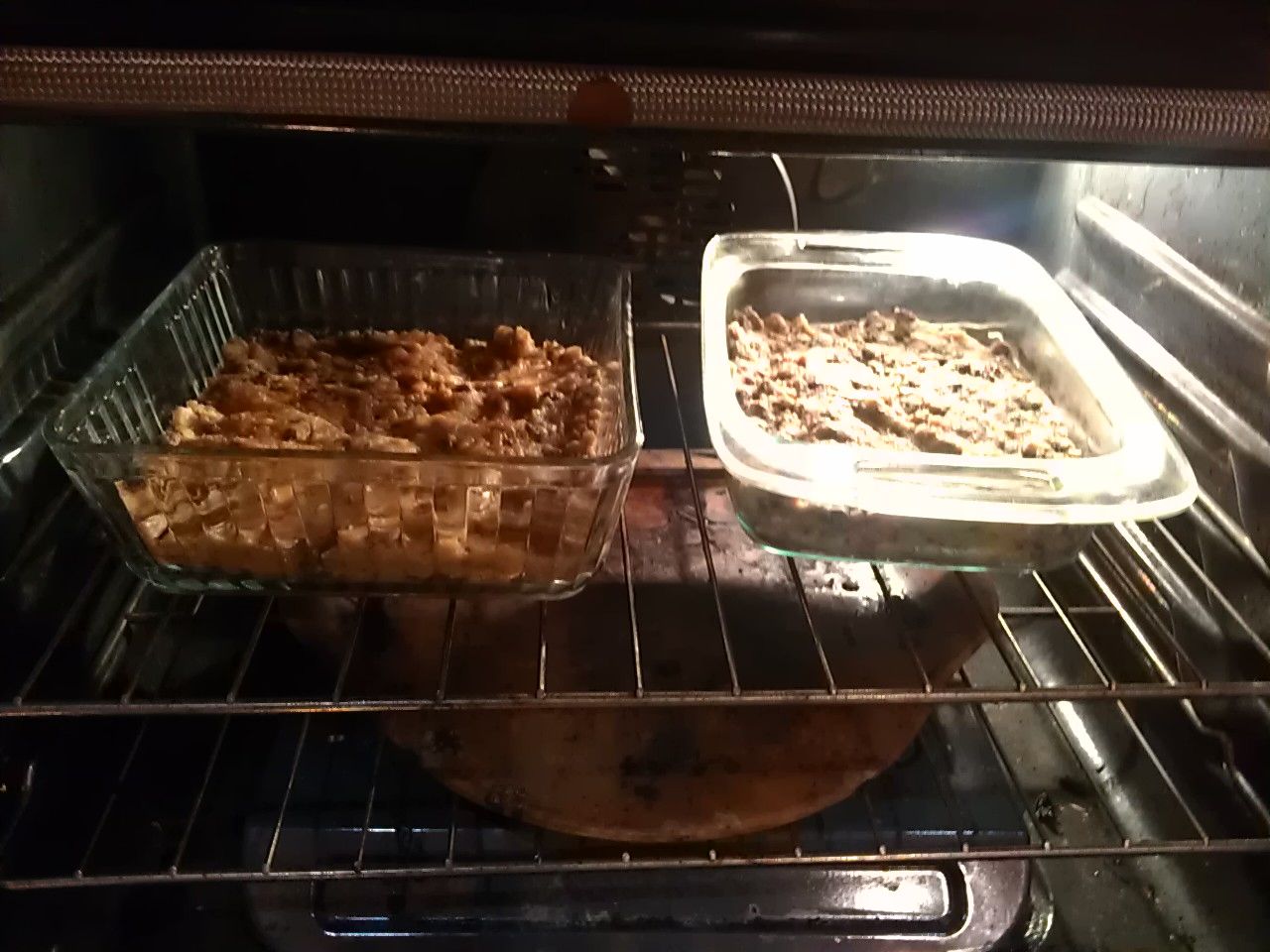
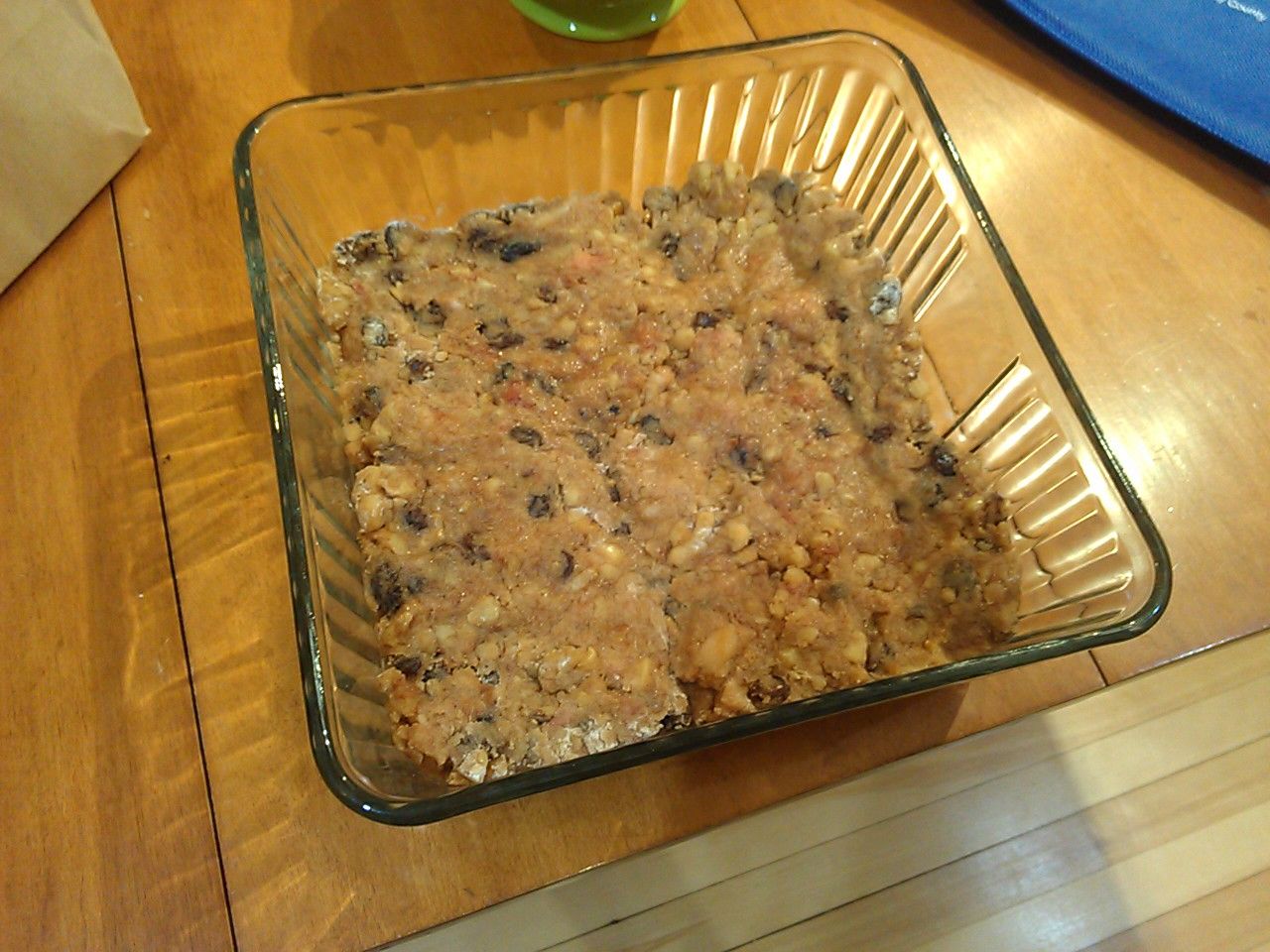
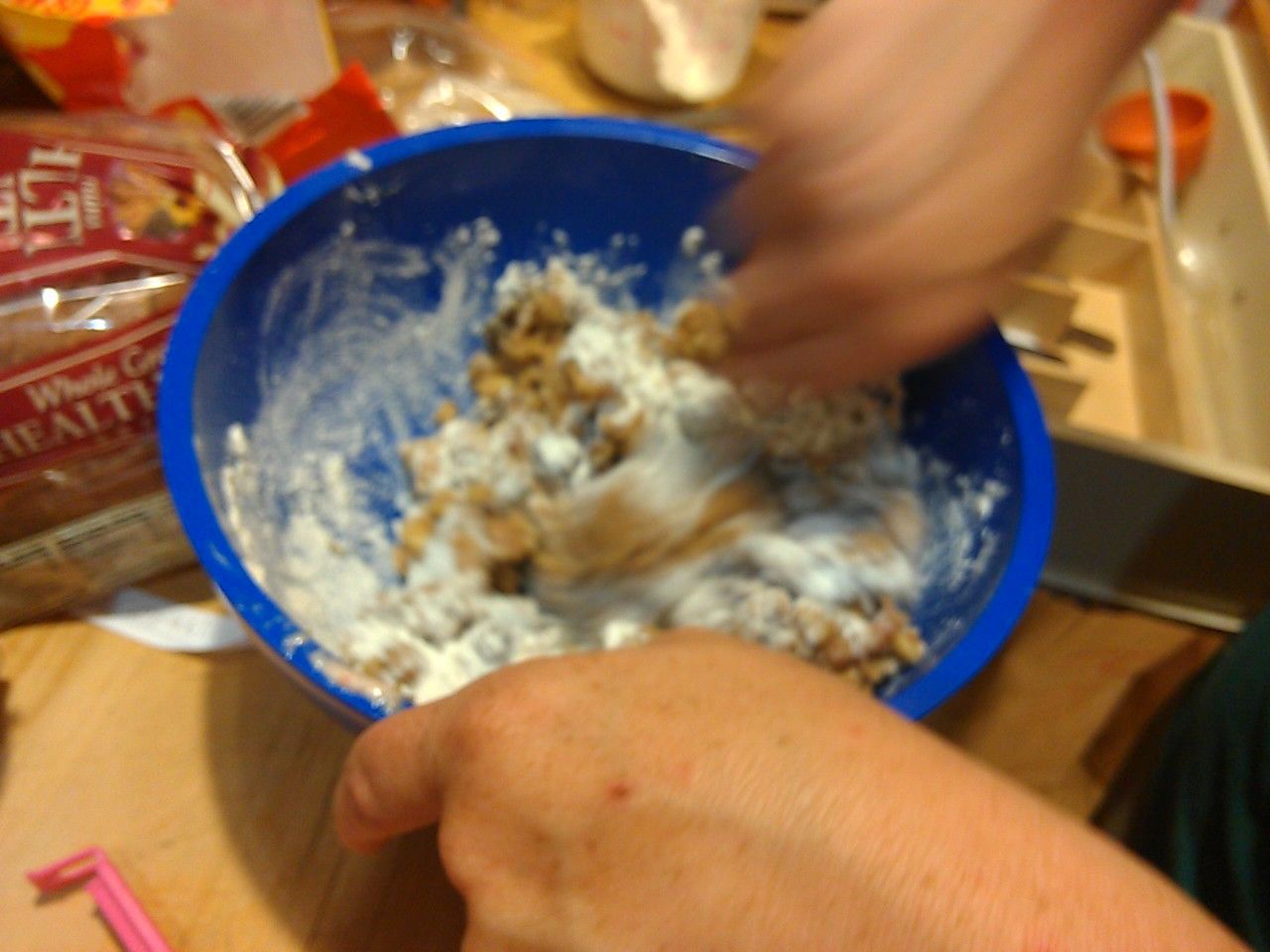
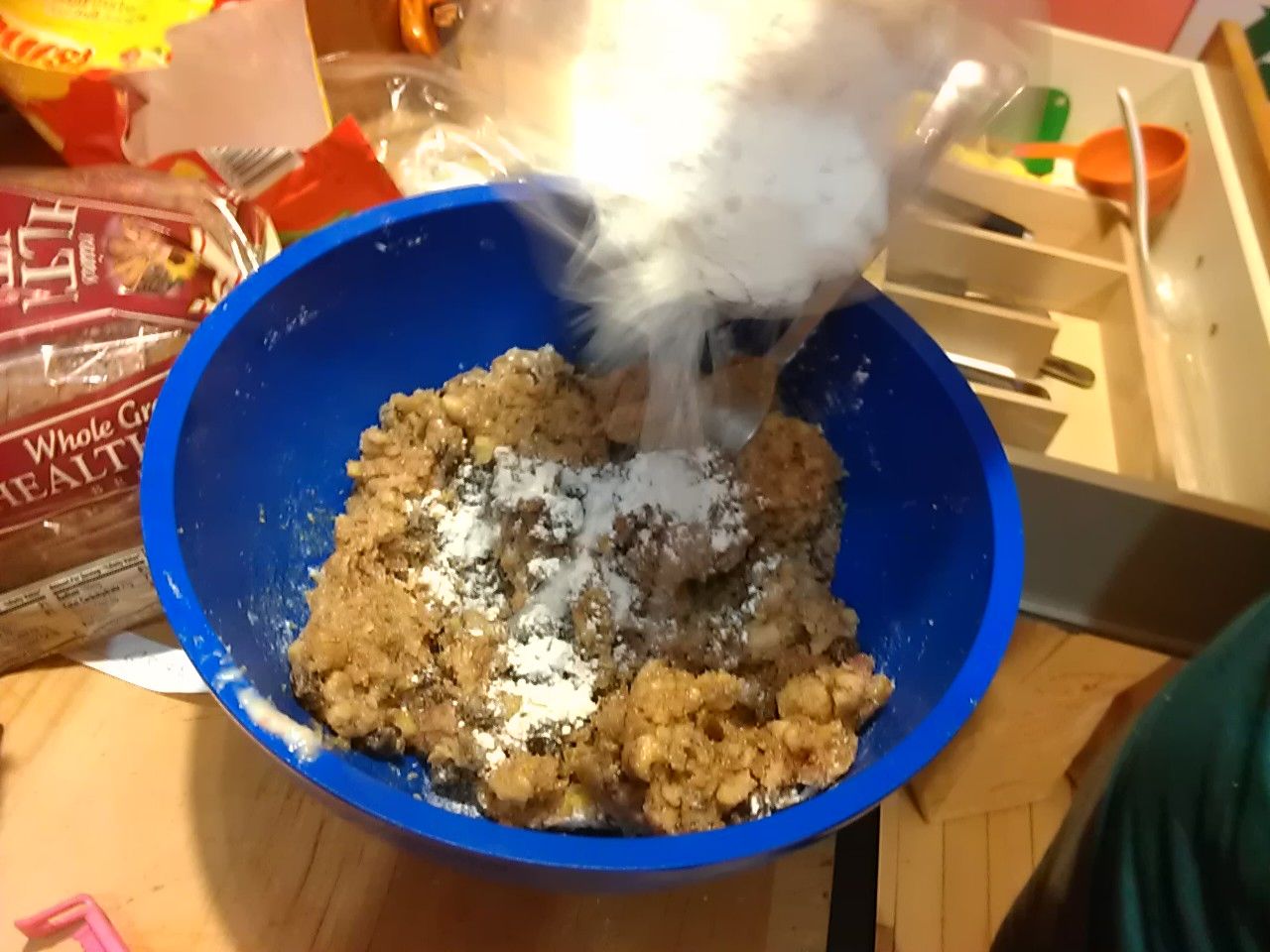
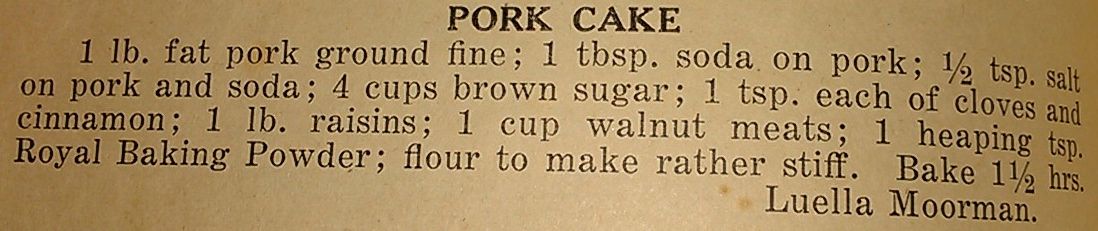
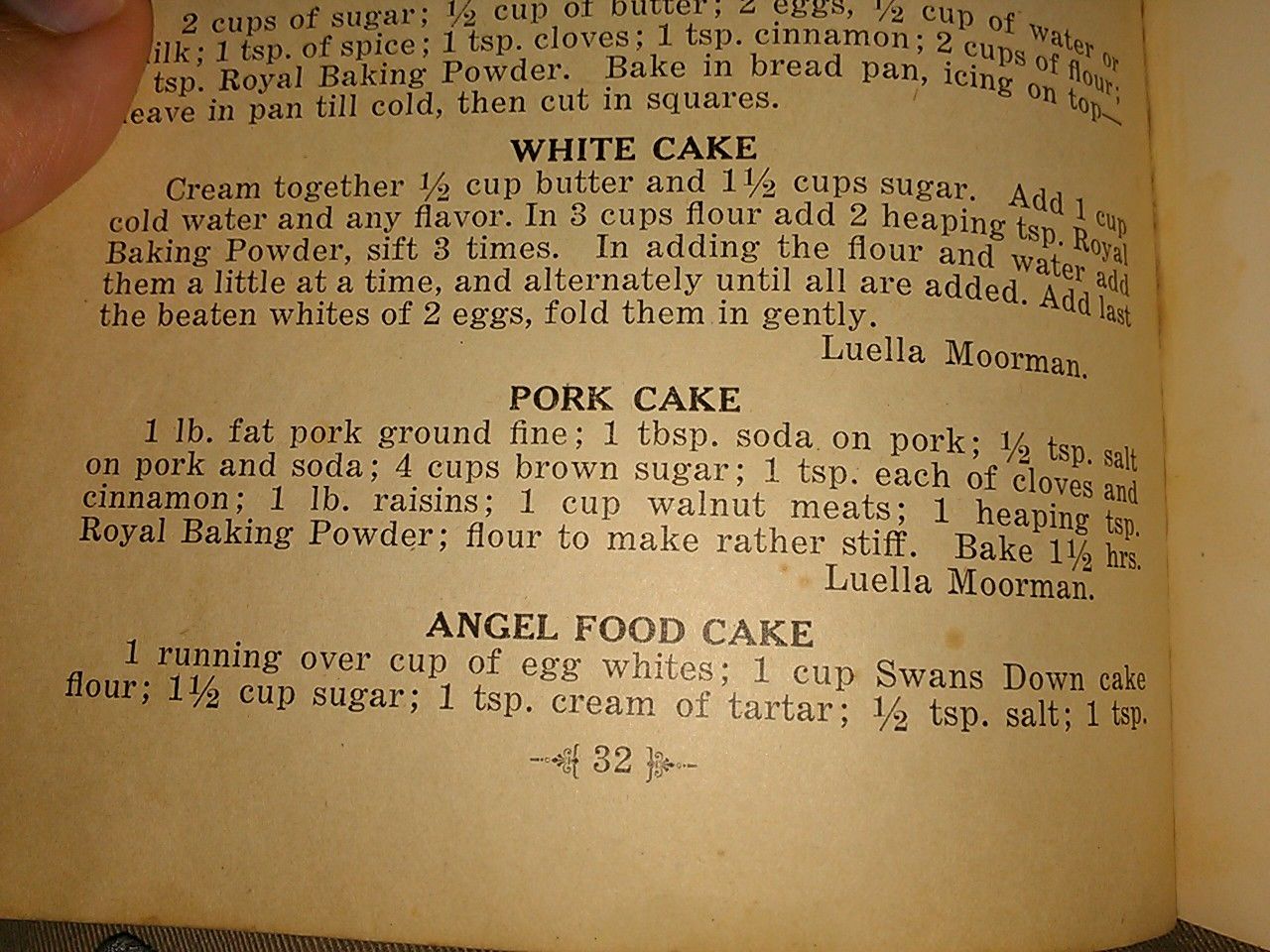
Pork Cake


Notes:

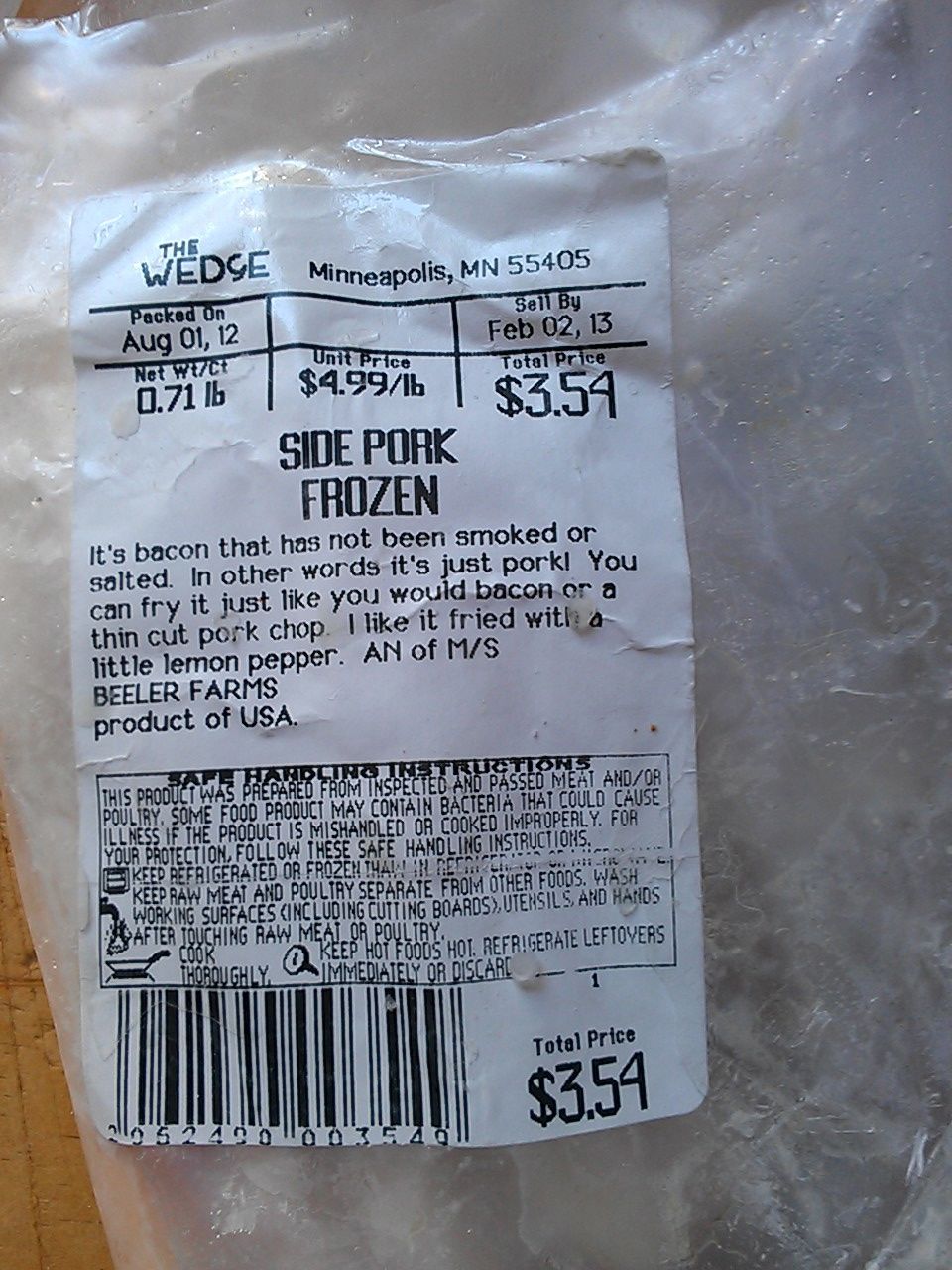
– Grinding the side meat in a blender was a huge pain in the neck; best to plan ahead and ask the butcher to grind it.

– This recipe made two 8″x8″ cakes.

– For one of them we substituted pecans for walnuts and used one cup of maple sugar and one cup of brown sugar rather than two cups of brown sugar.  I liked that one better.

– ‘Enough flour to make stiff’ turned out to be about two cups total (one per cake)

– I panicked and insisted the cakes be pulled after an hour.  There’s no telling what another 30 minutes would’ve done; someone with candy-making instincts (vs. cake-baking instincts) might have better intuition about baking time and temp.

– Pretty good!  Taste and texture closely resemble pecan pie filling.  It doesn’t taste especially of meat (certainly no more than lard-based pie crust.)  Might be worth trying with smoked bacon to emphasize the peculiar origins.

Posted in food | Leave a comment

What do these three things have in common?

Nine-banded Armadillo

Opossum 1

Porcupine Face

Friends on Facebook were recently discussing opossums, and one of them referred to them as ‘rodents’. Despite inner struggle, I failed to resist my impulse to correct her. I did, however, prevent myself from regaling her about opossum natural history so I will instead regale you, my nonexistent audience, as a safety valve.

When I was a kid, there were no ‘possums in Minnesota but, thanks to global warming, they started to show up in large numbers in my late twenties. I’ve always regarded a possum sighting as a major event, partly due to their rarity up here and partly because of a half-remembered David Attenborough anecdote from my childhood.

The story, as I remember it, turns out to be pretty accurate. South American used to be an Australia-like evolutionary backwater, with all kinds of stupid and ridiculous animals prospering undeservedly. When North America finally smashed into South America, it let loose a torrent of murderous, high-tech placental mammals which swiftly devoured and/or out-competed the South American natives. There was a massive extinction event, after which South American fauna looked more like the rest of the non-Australian word with big, fancy, high-speed placental mammals roaming around, and relatively few comically large flightless birds, plains-dwelling crocodiles, etc.

Opossums, being old-fashioned marsupials, are a notable survivor of that cataclysm. They’re ancient South American refugees, still traveling north to this day.

Catching up on the history, though, I’ve now learned that opossums aren’t the only escapees — two other notables are porcupines and armadillos. These three, obviously, also make up the Holy Trinity of Roadkill. That can’t be a coincidence! The fastest of the South Americans were no match for their more efficient North American attackers, but those South Americans who relied on ridiculous, passively horrifying defense techniques fared pretty well.

All three (but especially possums) survived by acting like roadkill — pretending to be dead, stinky, and unappetizing enough that the newly invading predators were baffled and disgusted and simply left them alone. In a sense, they invented the concept of roadkill long before there were actual roads. This strategy carried them not only through the North American invasion, but also led them safely through the next great extinction event (the one where humans showed up and ate absolutely everything in the Americas that was even remotely delicious.)

Only now, finally, in the 20th century, has an enemy appeared that is undaunted by spines, armor, and grossness. The one technique that served so well through so many disasters (that of simply lying down and waiting for the threat to pass) is poignantly ineffective in the face of a speeding car. It is, I suppose, a lot easier to defend yourself against malice than against indifference.


Posted in Uncategorized | Leave a comment