What’s good for that

wrist brace

When I set out for lunch today I accidentally left my wrist brace on.  On my way out of the apartment building, a guy who was peering inside stepped back and opened the door for me.

He:  Hey man, what happened to your wrist?

Me:  Oh, um… just joint problems.

He:  Too much bowling, huh?

Me:  Um, no, too much typing. (I’m starting to walk away, at this point.)

He:  What’s the name of that thing, that thing that happens in your wrists…

Me:  (Pausing, trying to be polite.) Carpal tunnel syndrome?

He:  Yeah!

Me:  (Edging away again.  His voice get louder to compensate.)

He:  You know what’s good for that?

Me:  (still edging away)

He:  Herb!  You, know, weed!  (He makes the universal ‘toke’ sign)

Me:  (pretty far away, by now)

He:  (shouting)  SO, DO YOU NEED ANY?  ANY HERB?

Me:  NO, NO THANKS.

He:  (unintelligible, out of earshot)

Posted in Uncategorized | 1 Comment

does it speaketh of the trinity?

Right-side up abalone

Ok, here’s how this works:

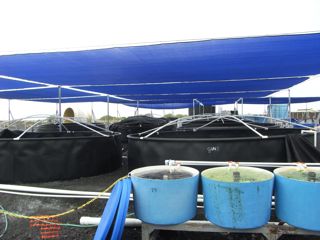
First, the veligers (that’s the planktonic larvae of a mollusk, in this case, an abalone) putter around in the water for a week, eating nothing and looking for a good place to land.  Then they settle down and grow pinhead-sized shells and eat cultured diatoms.  (These stages are described and distant buildings are waved at but, as usual, the microscopic bits of the lifecycle are left out of the tour.)

Meanwhile, a huge amount of  algae is growing in big open-air troughs.  The vast majority of space on the farm is devoted to these algae troughs, in much the same way that most of a 1950’s pig farm was devoted to beanfields.
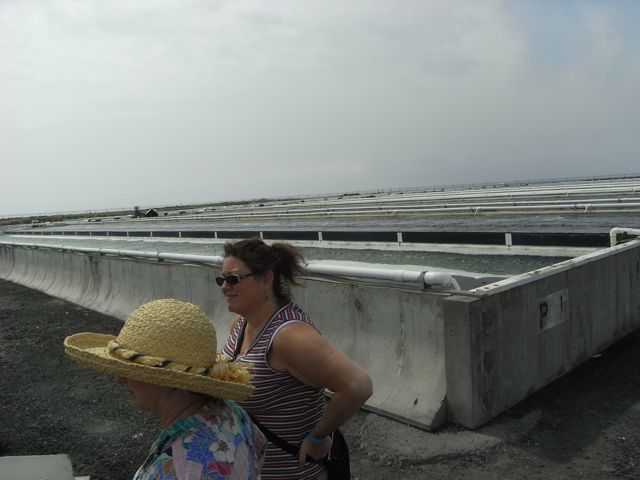
Algae growing troughs

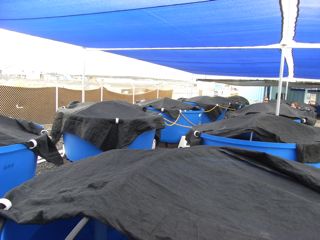
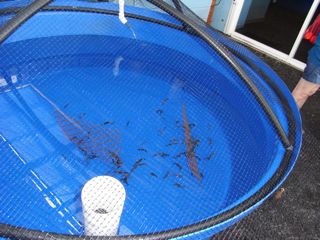
Once the abalone are of a manageable size (yet still pretty tiny) they’re moved into big cages*.  Each cage contains a big plastic manifold with lots of vertical growing space.
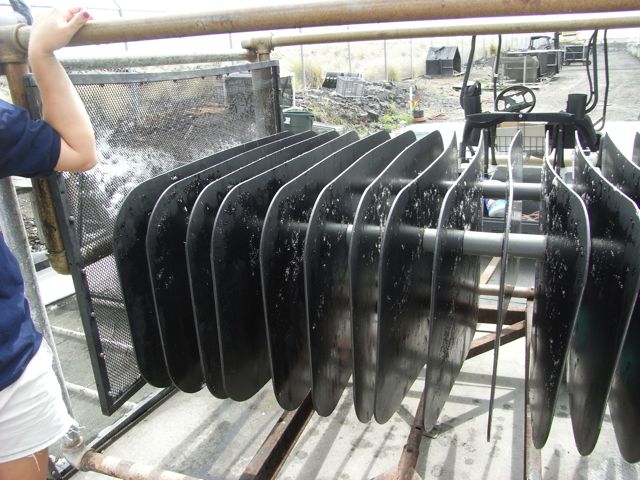
rimg0026.jpg

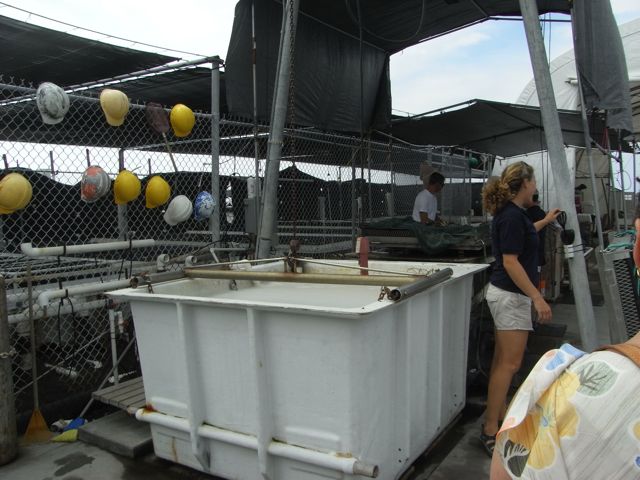
Periodically, these manifolds are lifted out of the cages and dropped into a bath of carbon dioxide-enriched seawater.
rimg0027.jpg

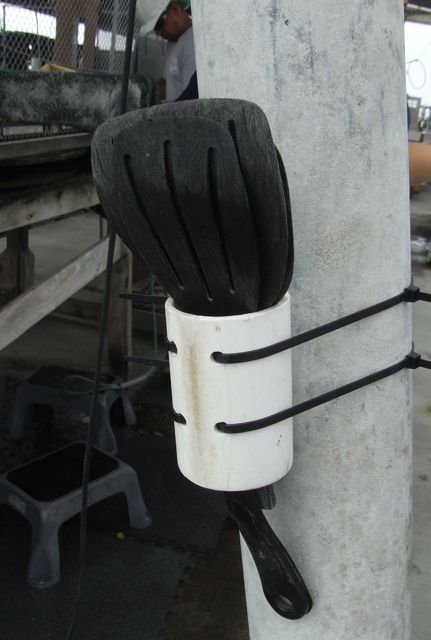
The CO2 dizzies the abalones and loosens their grip, but does not otherwise harm them.  In their dizzy state, they can be removed from the manifold with a spatula**.
rimg0028.jpg

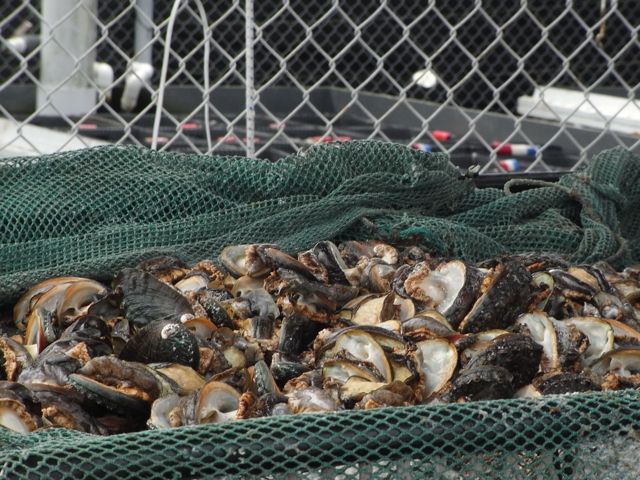
They’re all scooped into a big pile, where they immediately slurp onto each other’s backs.  (But, hopefully, not all that hard, since they’re still dizzy from the CO2.)
rimg0029.jpg

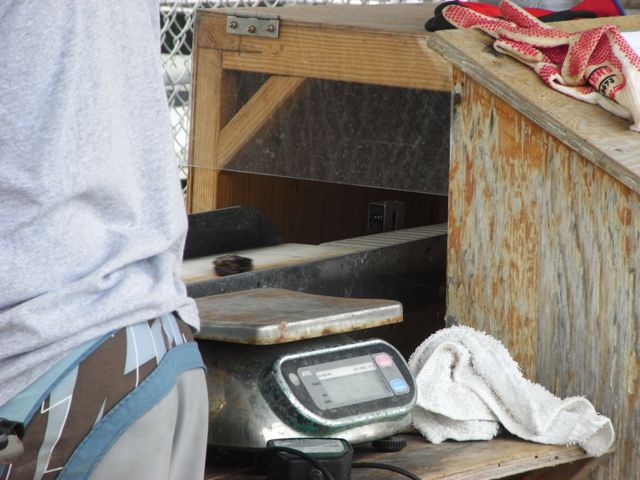
Then a group of dedicated and strong-handed individuals painstakingly separates them and sends them, one at a time, down a conveyor belt.
rimg0030.jpg

The conveyor belt rolls them over a big shiny weighing-machine
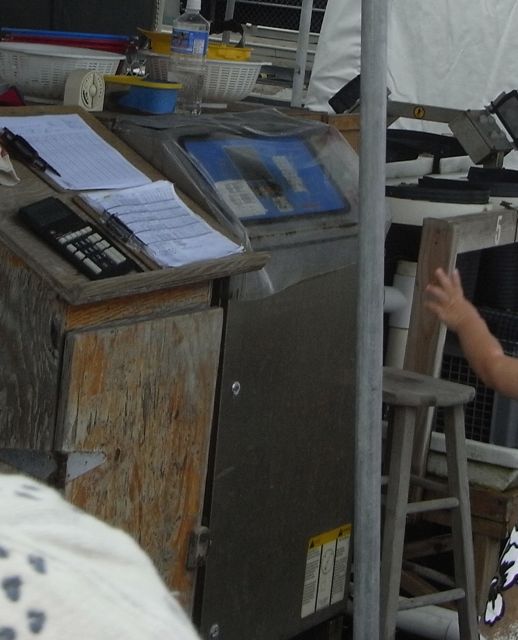
rimg0031.jpg

The weighing machine triggers various guide-arms to swing out, thus diverting the differently-sized abalone into appropriately-labeled bins.
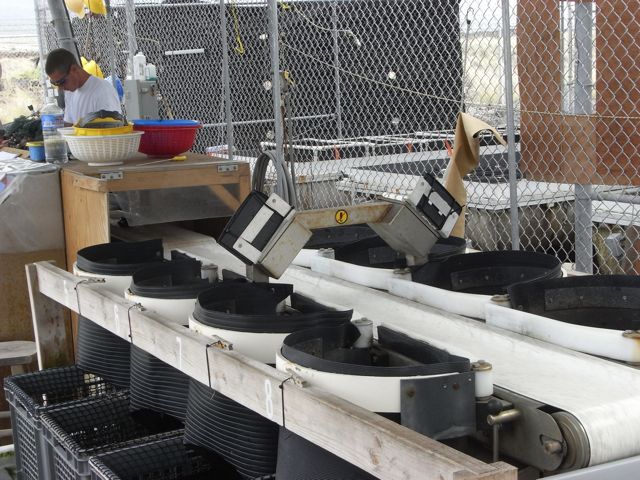
rimg0033.jpg

Tiny ones are sent back to the cages to eat more algae in the company of similarly-sized neighbors.  (Apparently age doesn’t correspond very closely to size, so they need to be sorted and resorted  to avoid the giants from out-competing the smaller ones.)  Larger ones are packed off to market — for the most part, airlifted alive and damp to fancy restaurants in Japan.  A very lucky few are reserved to spawn and produce the next generation.

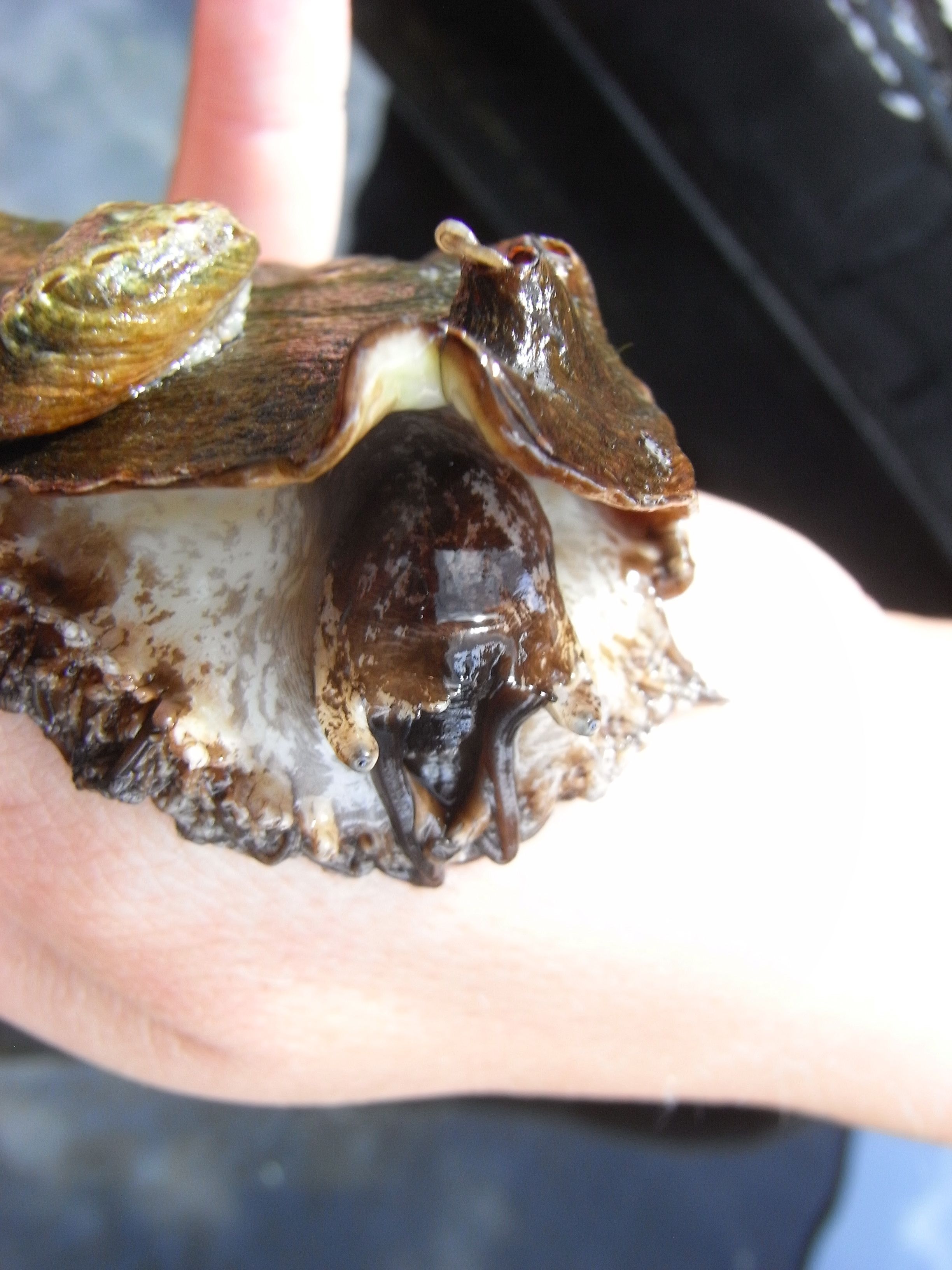
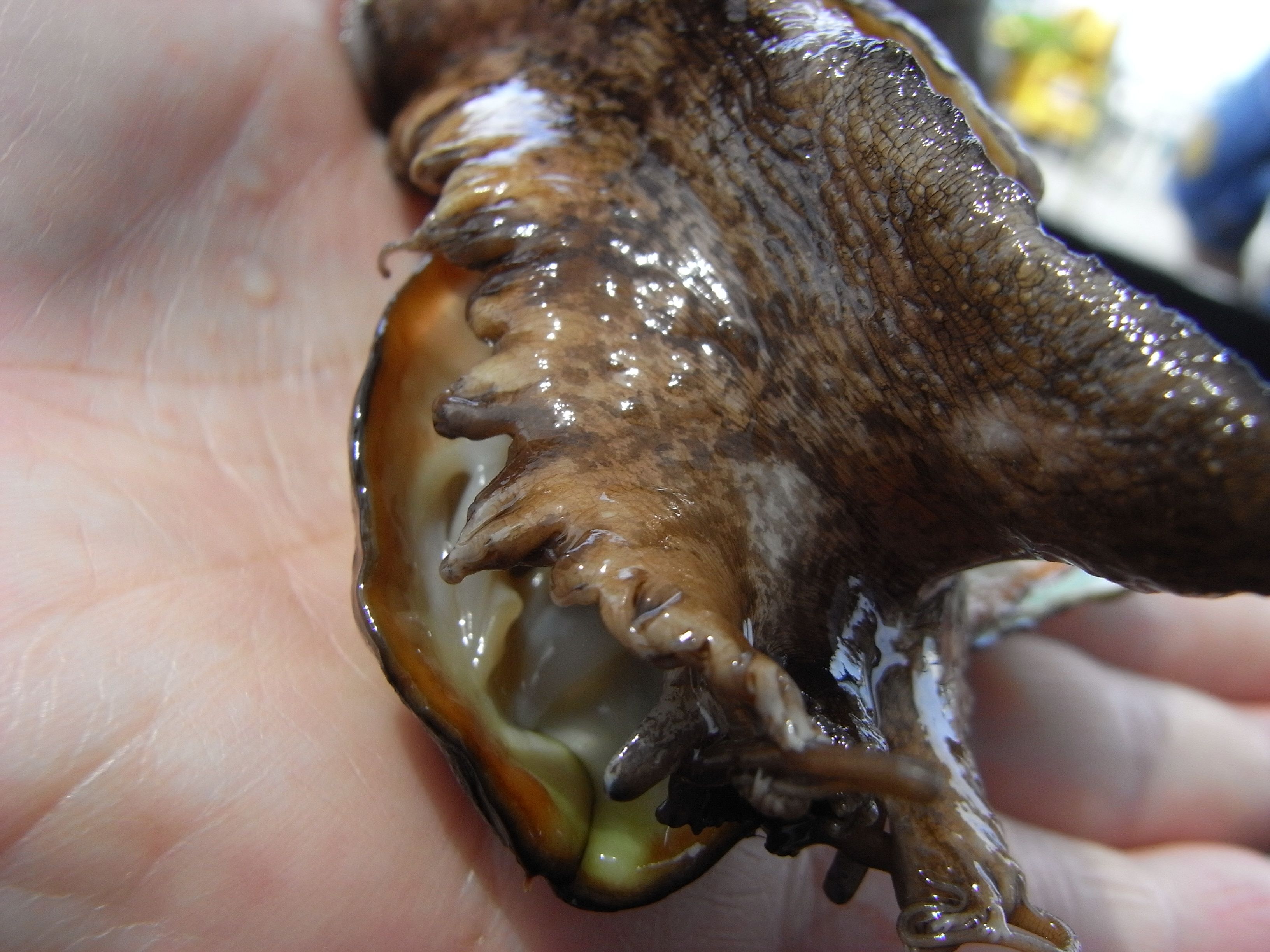
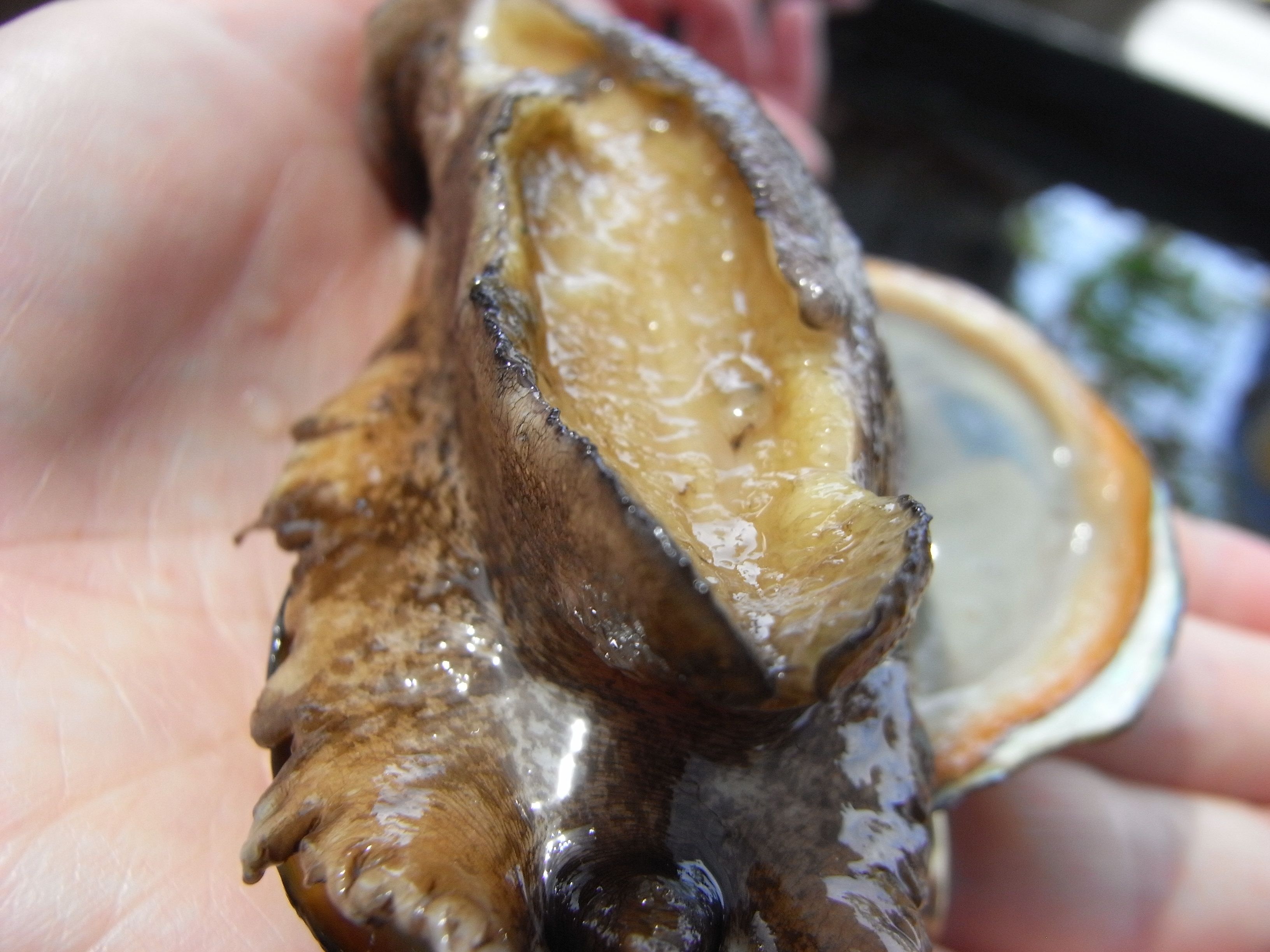
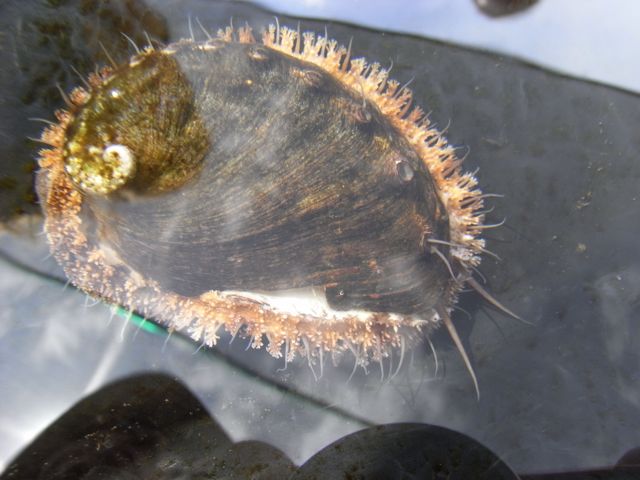
Here are some grotesque close-ups of an alarmed, overturned 3-inch-long abalone:

abalone-face.jpg

abalone-fringes.jpg

abalone-foot.jpg

* Not tanks, cages.  Apparently several years ago the farm kept their stock in open-air tanks, and a sudden nighttime drop in barometric pressure prompted all the abalone to spawn at once, badly fouling their water.  The farm manager arrived the next morning to find that all the abalone had crawled out of their stinky tanks and were literally on the road, heading for the nearby ocean.  So now they use cages, and maintain better water quality.

** I guess getting a wide-awake abalone unstuck is unrealistically difficult.  How difficult?  Well, my dad just told me a story about how my uncle Zeke used to fish for abalone.  “Sometimes he would drive to Half Moon Bay with his wet suit and a tire iron…”

Posted in critters, food, travel | 1 Comment

Seahorse farm

This afternoon my mom and I visited the ‘Ocean Rider’ seahorse farm.  It’s a family operation which is developing domesticated varieties of seahorses which are suited for captivity — previously most pet seahorses were wild-caught, extremely finicky, and died promptly after sale.  Their mission is largely commercial (they’re a for-profit company and make their money selling seahorses to fishkeepers) but they’re also involved in some species preservation work.

oceanrider sign

Close-up of an orange horse

The horses in the hatchery (no photos allowed) certainly seemed domesticated.  As soon as we tourists walked up to one of the tubs, the four adults rushed up to us and poked their noses out of the water.   Part of the tour involves having the visitors feed shrimp (opea ula, below) to the breeders, so they have every reason to be pro-tourist.  The new babies were extremely cute and also glad to see us — but, alas, unphotographable.

There has been an experimental energy plant here on the coast for 30 or so years which uses the temperature gradient between deep and surface ocean water to generate electricity.  A side effect of all that pumping is big supply of uphill seawater, so a constellation of aquaculture facilities have sprouted up around the energy plant.  (I’m still hoping to visit the abalone farm before the week is out.)  There’s also an airport a couple of miles away for easy shipping.

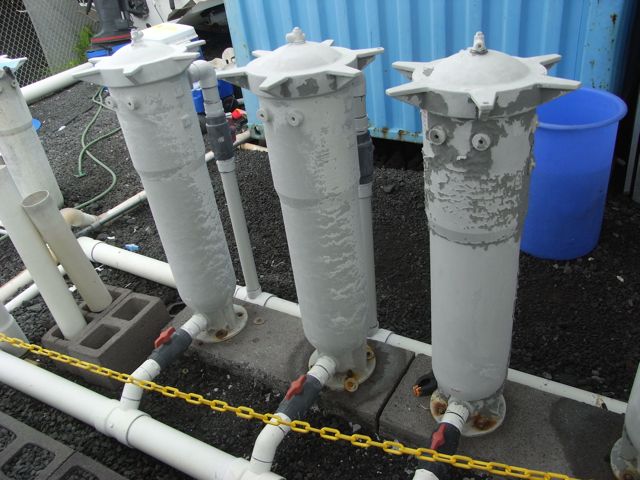
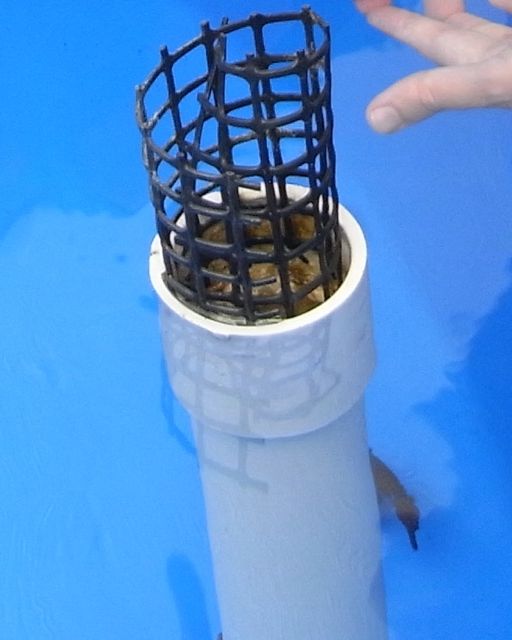
Lots of free seawater means that the water-quality technology at the seahorse farm is appallingly simple — clean water comes in from a big pipe, dirty water rolls out into the ocean.  No mucking with filtration or salt mixing or any of that nonsense required in the midwest.  This is pretty much the same principle as the mess of tubes and overflow pipes in my basement tanks, only much much bigger (and, of course, with seawater rather than chlorinated Mississippi river water.)  A system like this any distance from the ocean would cost zillions of dollars to operate.

some random plumbing

outflow pipe

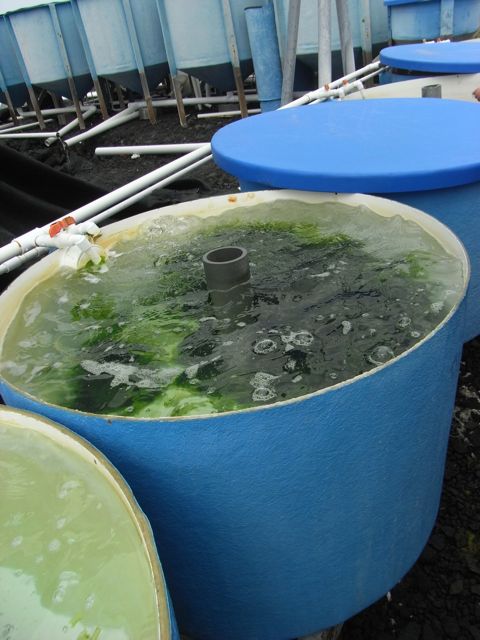
If you check out the farm’s website (new-age soundtrack warning!) you can see that they’re selling blobs of seaweed for $20 a pop.  This must be a big winner for them since the plants grow in big open-air tubs without requiring any apparent attention at all.  The tourguide invited us to pull out a handful and take a bite, which Mom immediately did.  (“Salty!”)  At this point in the tour, my jealousy mounts:  unlimited clean sea water, 360 days of sunshine per year… it’s almost unsportsmanlike.

seaweed tub

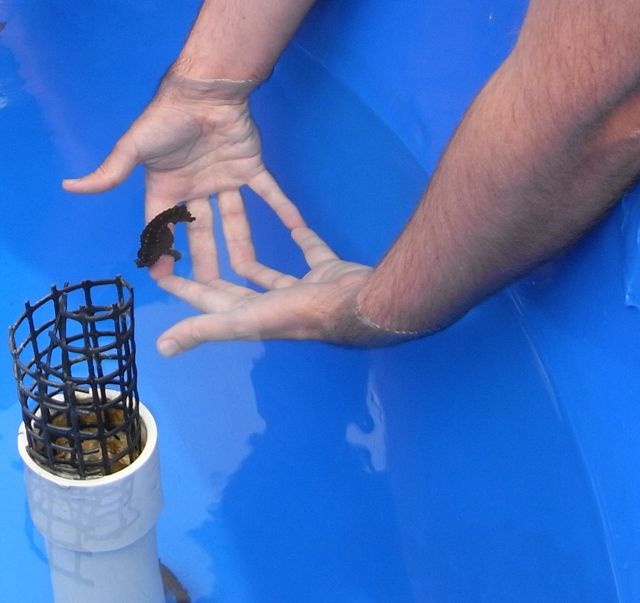
The gimmicky (and most time-consuming) part of the tour involved poking freshly-scrubbed hands into one of the tanks so that a seahorse could be gingerly placed on our fingers. It’s worth noting that this was not part of a hard sell — due to environmental laws they actually don’t sell any of their animals within the hawaiian islands, so there’s no danger of impulse purchases.

seahorse on my finger

Random big outdoor seahorse tanks - 1Random big outdoor seahorse tanks - 2

Random big outdoor seahorse tanks - 3Random big outdoor seahorse tanks - 4

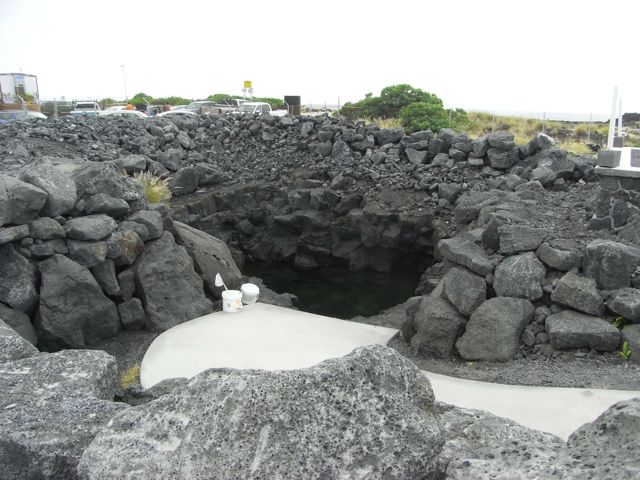
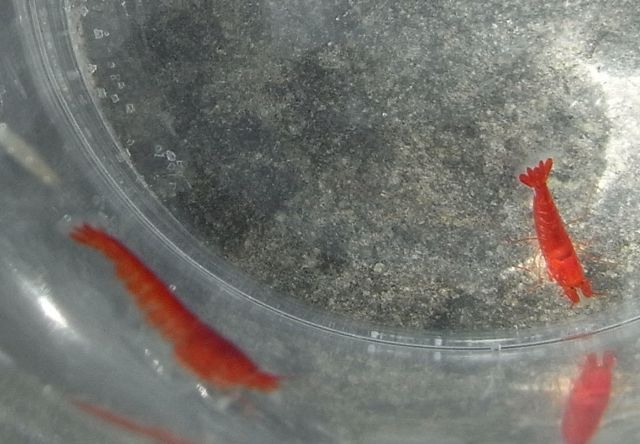
Hawaii is home to ‘Halocaridina rubra,’ a shrimp similar to the ones I keep in the aforementioned midwestern basement.   They live in brackish pools that are connected to the ocean via lava tubes.  In order to provide extra-deluxe food for their breeders, the owners of the farm dug a hole in the lava on their grounds — the hole promptly filled up with seawater and, subsequently, Halocaridina.  Another clear advantage of geography.

Anchioline pool full of OpaeUla

Opae Ula aka Halocaridina

Much of the technology they’re developing here has to do with food for the young seahorses.  There a lot of big tubs of brine shrimp at all different sizes, and dozens of cone-shaped plankton tanks for copepods and all manner of other tiny foods.  This work was mentioned but not explained in detail, and I didn’t get much of a look at their plankton setups.  I guess they expect the tourists to be more interested in things that are actually visible to the naked eye — go figure.

Posted in critters, travel | Leave a comment

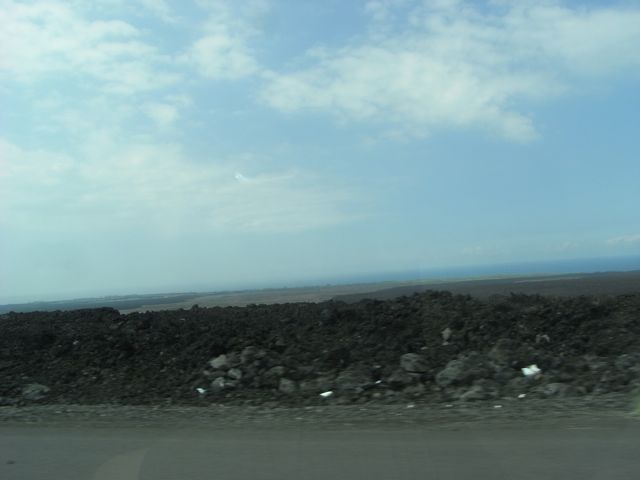
‘a’a

In my tour of landscapes yesterday, I left out the most dramatic which is just a bit down the road from the last photo.  Lots of the kona coast is covered with these lava flows… occasionally there are patches of tufty grass in between the lava, populated with lava-colored goats.  Good thing someone invented shoes.

‘a’a

Posted in travel, Uncategorized | 2 Comments

creepy-crawlies

My camera can no longer zoom, but the macro lense seems to still be working fine.  I’m uploading fullsized versions of most of these photos with thumbnails in case anyone wants to see individual lizard-scales or bug-veins.

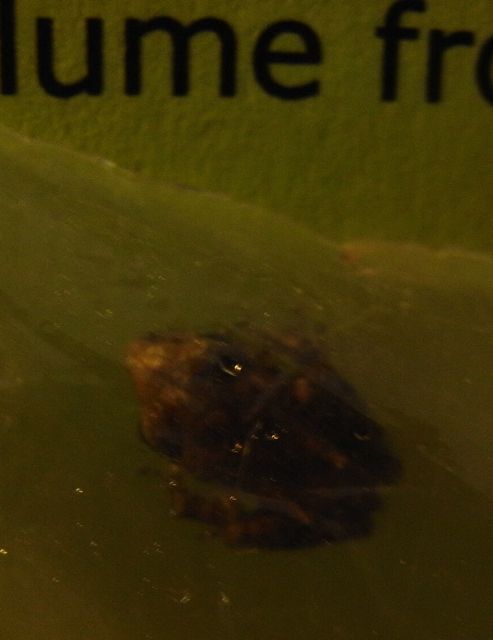
treefrog (Coqui?)

Someone at the hotel in Hilo captured this frog and stuck him in a ziplock bag, hence the blurry photo.  Note that the text, above, is 12-point.  That’s one small frog!

dragonfly   sea turtle

The house in Puako is conveniently equipped with two models of geckos for daytime and nighttime bug control.  The colorless nocturnal lizards adopt the standard ‘hold still and no one can see me’ strategy when I try to take pictures (of course, it’s hard to arrange proper lighting), but the day geckos (these are ‘gold dust,’ an exotic species from Madagascar) seem more accustomed to being visible and tend to scurry out of view.  These last two pictures, at least, are probably worth zooming in on.

House gecko gold-dust day gecko gold-dust gecko profile

Posted in critters, travel | 2 Comments

Big island landscapes


View Larger Map

I’m spending the week with my parents and nieces in Puako on the Big Island (aka “Hawai’i island” but no one ever calls that because it’s confusing that part of the state has the same name as the whole state.)  I love looking at the satellite view because just looking out the window doesn’t make it quite so obvious that the island is mostly volcano and literally steaming, smoking and (gently) erupting at this very moment.

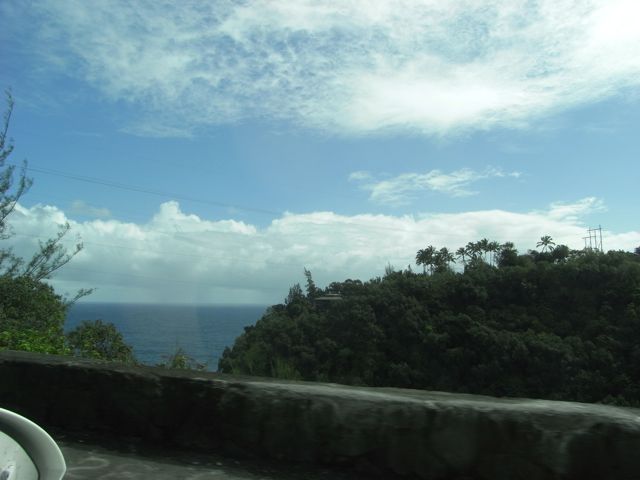
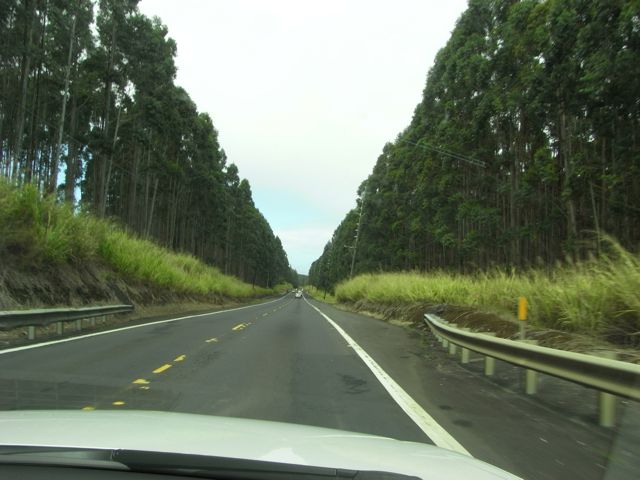
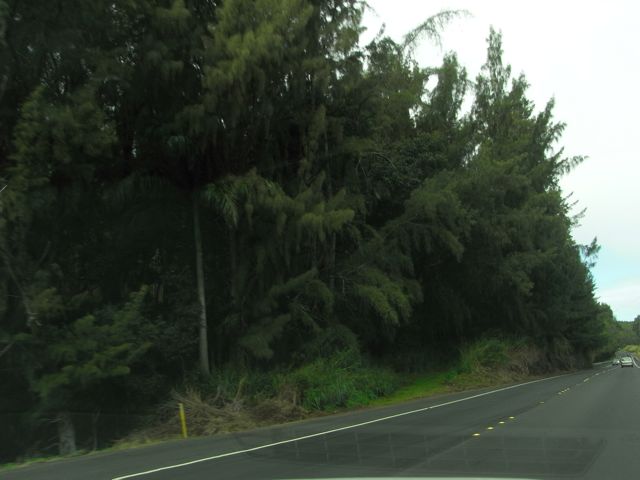
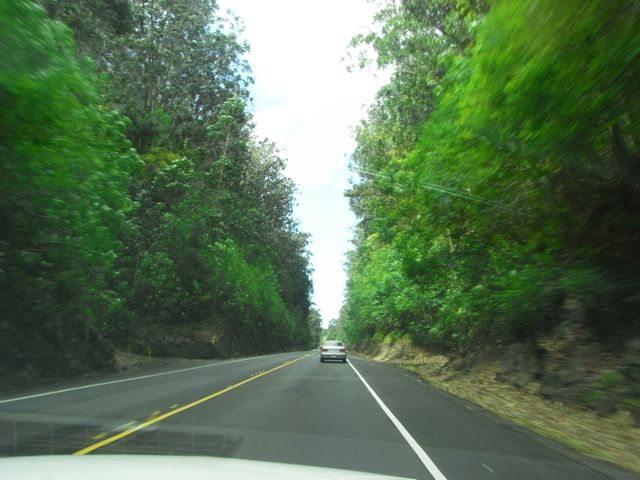
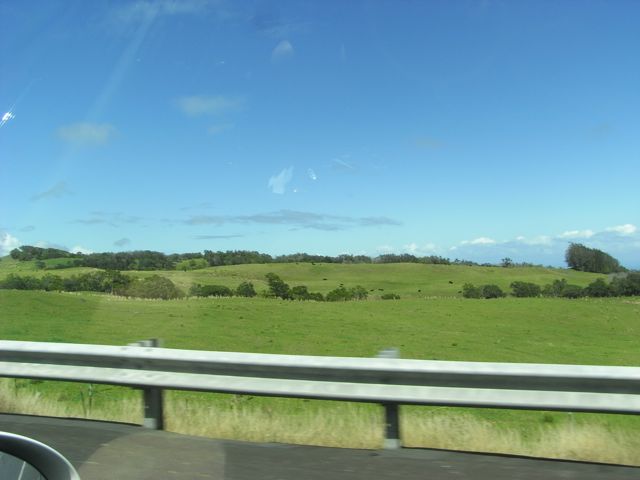
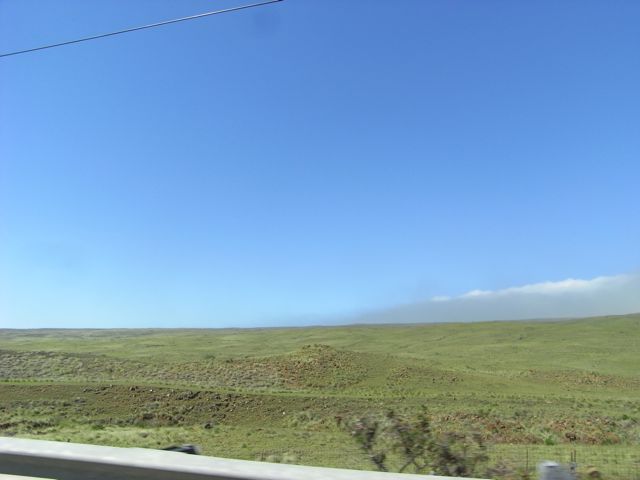
The dramatic landscape makes for dramatic climate shifts as well.  I flew into Hilo yesterday which is the middle of lush, rains-every-day jungle.  Over the course of a few hours we drove through chilly windy highlands, forest, and ranchland, and are now on the ‘dry side’ of the island which is rocky and scrubby like Arizona.  Furthermore, there was snow visible on mauna kea off in the distance.

These photos are in chronological order, east to west.  I couldn’t get any photos of the snow-capped peak because the zoom-lense on my camera has begun to misbehave badly.

Big Island landscape 1

Big Island landscape 2

Big Island landscape 3

Big Island landscape 4

Big Island landscape 5

Big Island landscape 6

Posted in travel | Leave a comment

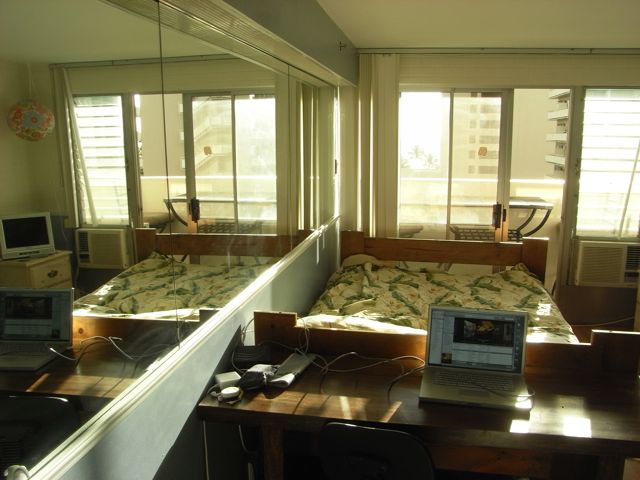
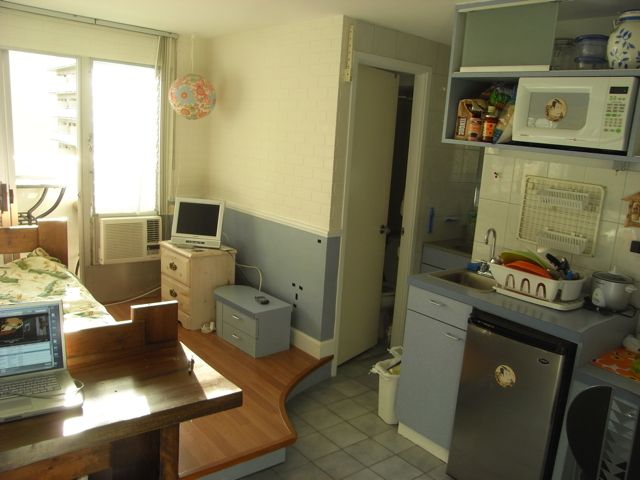
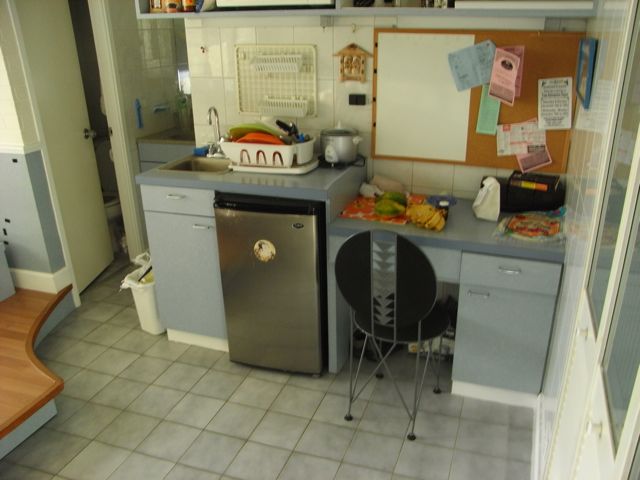
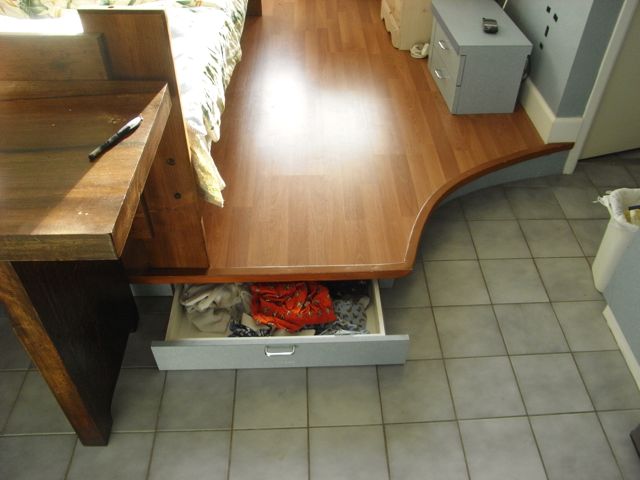
My tiny apartment


View Larger Map

Home 1

Home 2

Home 3

Toe-kick

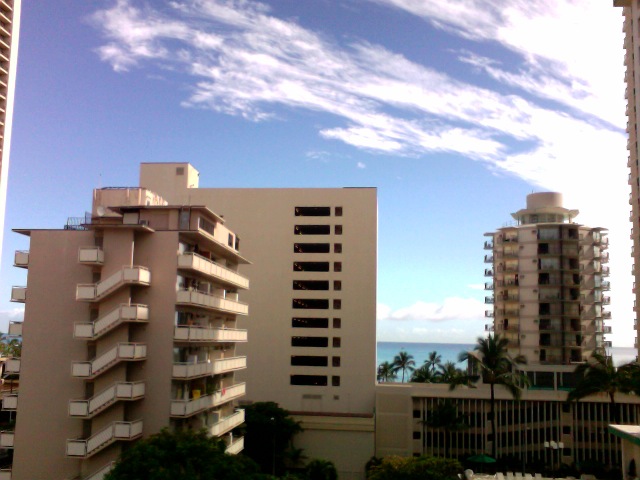
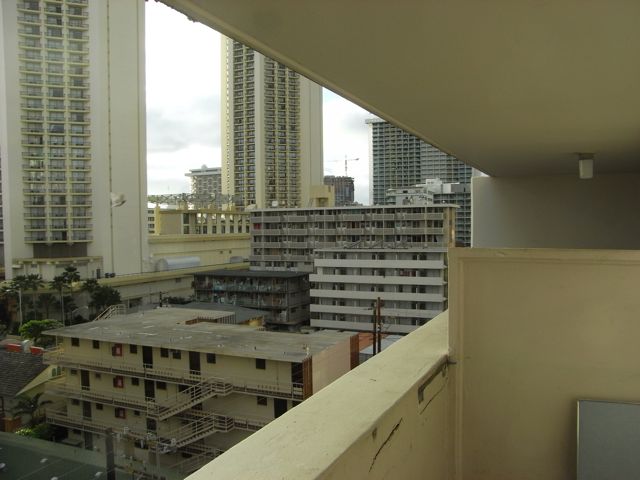
View 1

View 2

Half a block up the street (not quite visible in the photo) is a tiny one-story house remaining from a different era.  The woman who lives there throws a big fistful of birdseed out the door every day at 5PM, which causes a mob of pigeons to descend.  I presume that I have her to thank for the sub-$1000 rents in this building, for which I am grateful.

Posted in Uncategorized | Leave a comment

Diamond Head (2009)

After watching the inauguration this morning, I climbed up to the edge of Diamond Head crater.  It’s a steep 1-mile climb with lots of stairs and tunnels — and I always enjoy seeing the ruins of military fortifications put out to pasture.


View Larger Map

I turn out to be scowling in every single photo I took — there were big swarms of gnats at the summit.

DiamondHeadPortrait

I’m also tinkering a bit with  panoramic photo-stitching.  This is a view (click the image for a bigger version) from outside the crater, right before the path goes into a long, dark and high-traffic tunnel:

ValleyFromDiamondHead

And, here’s one view from the summit:

Reef From Diamond Head

I’ll have to remember to get more shots of clouds, next time.

Posted in travel | Leave a comment

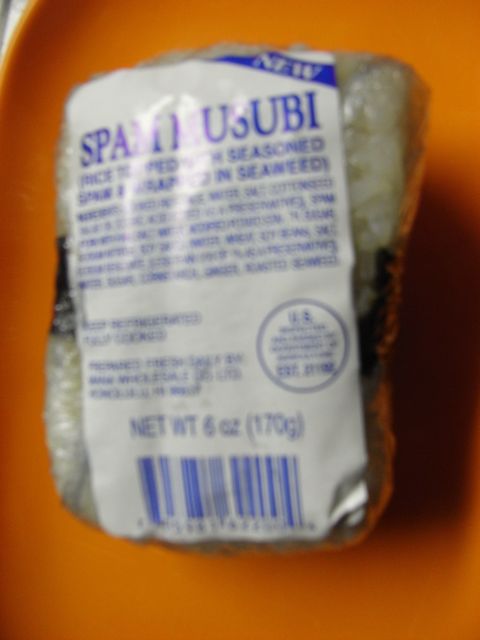
Wrapped musubi

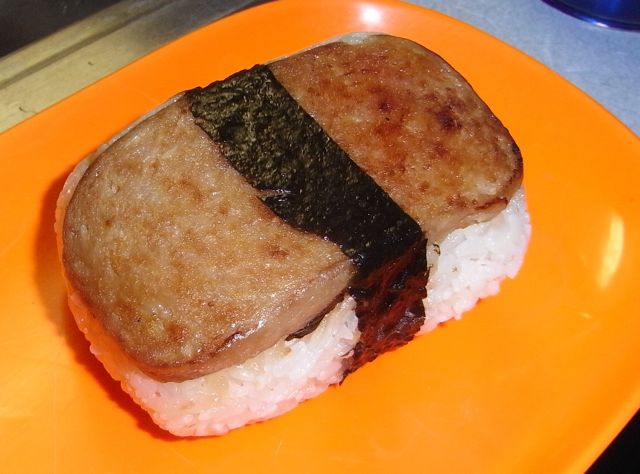
Plated musubi

Posted in food | Leave a comment

MJT

jurassic1.jpg

jurassic2.jpg

jurassic3.jpg

jurassic5.jpg

Posted in Uncategorized | Leave a comment