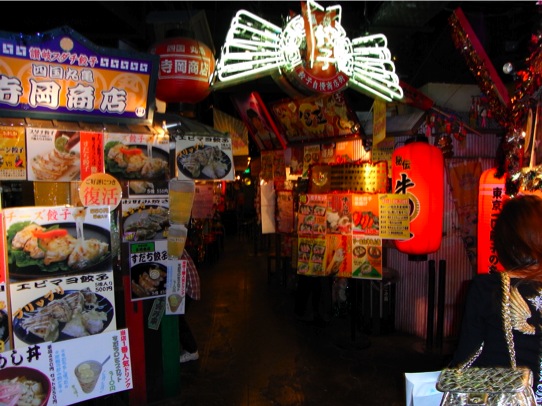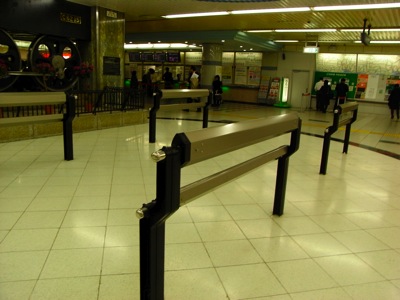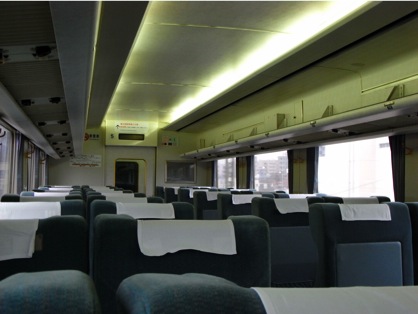
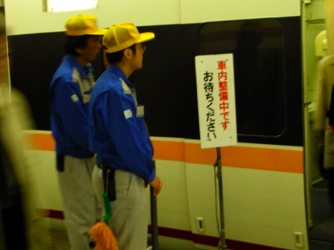
Yesterday I visited Nikko, which is a tourist town a few hours outside of Tokyo full of shrines, reliquaries and the like. This photo is of the train cleaning crew who hovered by the door waiting for the last passengers to exit so that they could rush in and vacuum before the train filled up again.
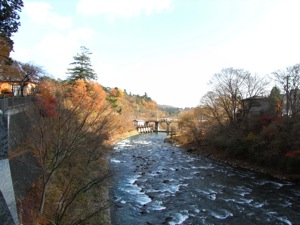
Here is what it looked like out the train window. It took a long long time for Tokyo to open up into the countryside, but it did happen, eventually.
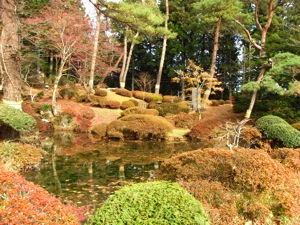
The next set of photos are from a temple and shrine complex, ‘temples’ being Buddhist and ‘shrines’ being Shinto. Due to lack of language skills, I don’t know all the facts, but the shrines seem to mostly house Tukogawa shoguns — their spirits and, in some cases, their caskets as well.
I’m sure that I’m not grouping the Buddhist and Shinto photos properly. Usually Shinto architecture is distinctly stark, but the shrines here were very ornate.
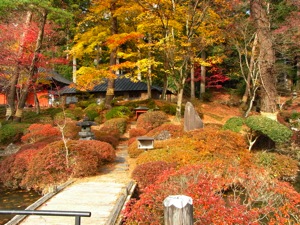
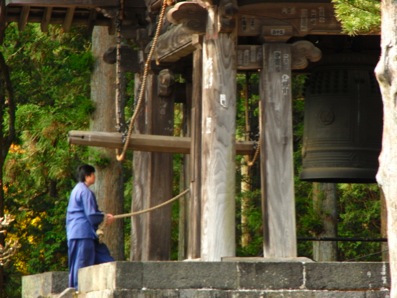
This bell made the second-best sound that I’ve heard so far this week. Click here for a movie of the bell ringer.
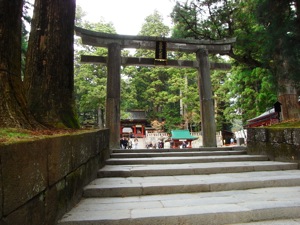
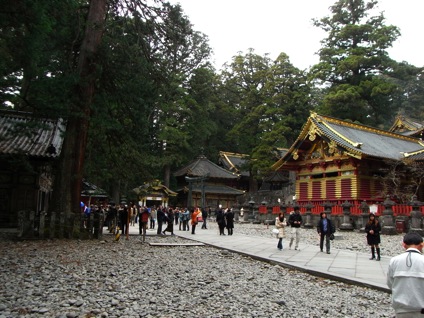
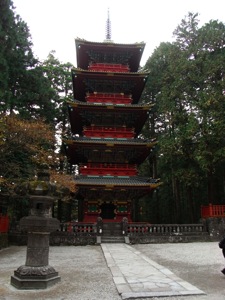
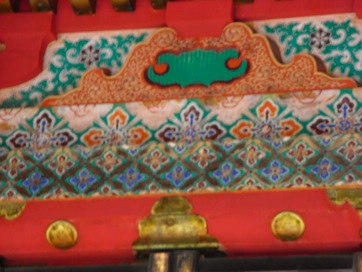
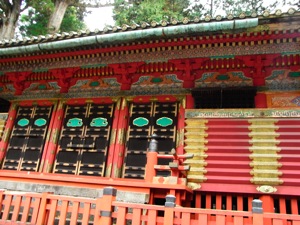
The decorations are largely gold leaf and lacquer. The lacquer is painted in layer after layer, one color at a time, and then each layer is carved away to reveal the color below.
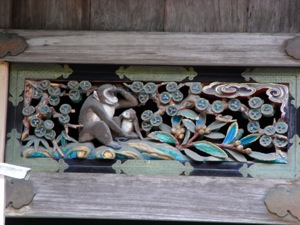
These monkeys were heavily photographed, so I joined in. The monkeys are part of a series of panels showing the stages of (monkey) life, from birth to parenthood.
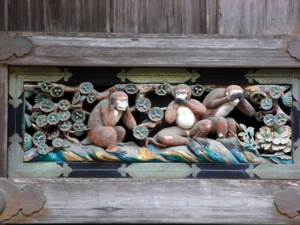
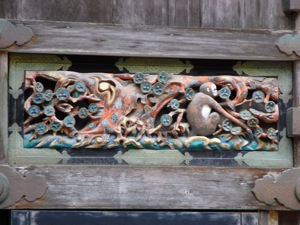
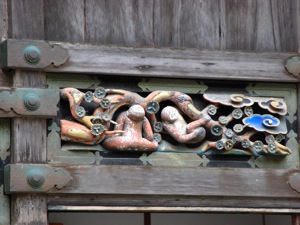
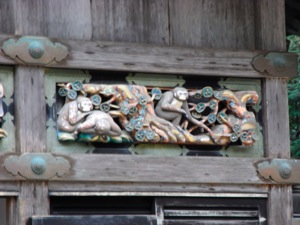
Boy, this page is taking a long time to load, isn’t it?
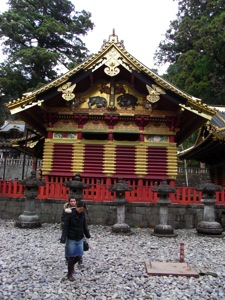
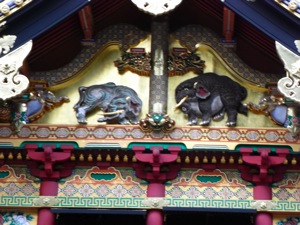
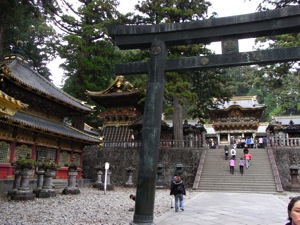
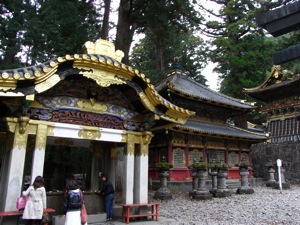
And, at last, a short climb brings us to Gold Leaf Headquarters.
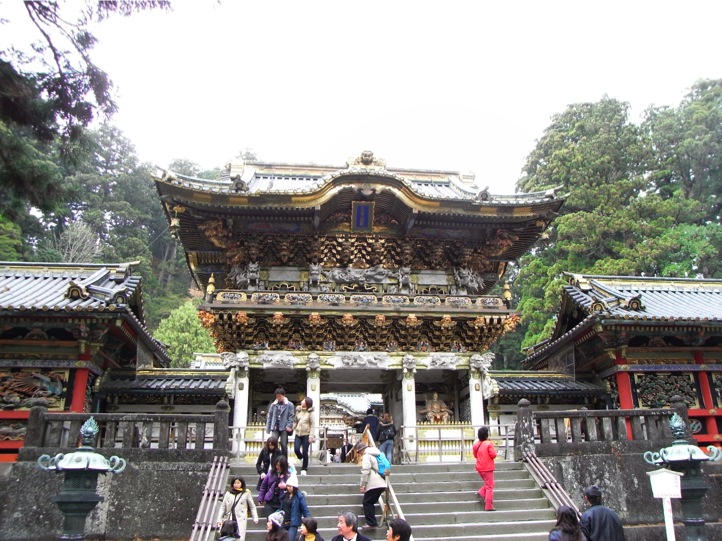
There was a docent in this temple who gave a long spiel which I couldn’t follow. And then he performed a completely surprising magic trick…
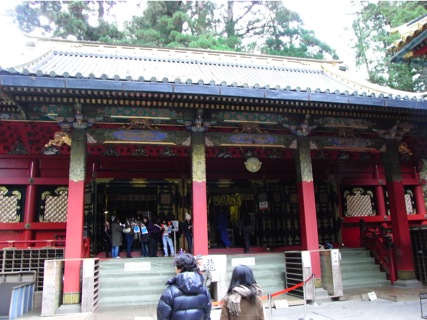
The interior of the building (no photos allowed) was rectangular and full of statues and half-walls. The docent clacked a woodblock here and there in a few places (nothing up my sleeves…) and then stood in a special spot and clacked again, and the whole building rang like a bell. He did it a few more times so we could be sure we weren’t hallucinating. I have no idea if that’s something that works by design or was discovered after the fact — the ‘lucky’ spot wasn’t in the center or in a marked place, or anything that would suggest intent.
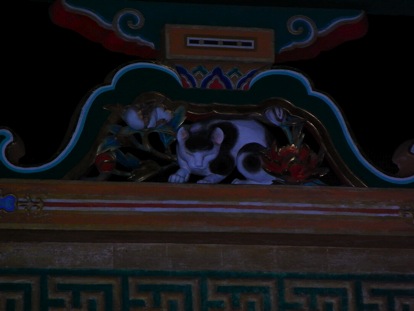
Throughout the complex were signs pointing to the ‘sleeping cat’. At last, it appeared.